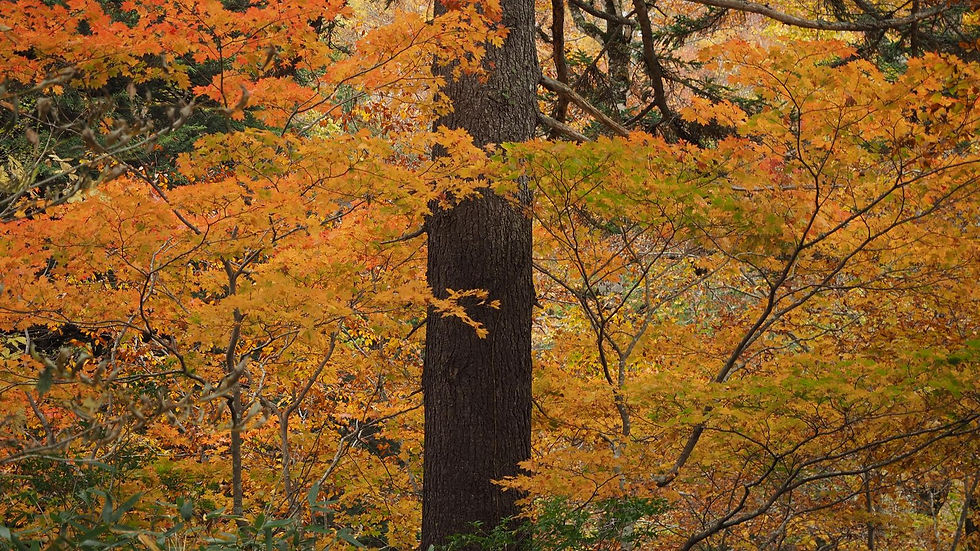
Best Month for Autumn Leaves in Japan: September to December Compared
- cody
- 3 days ago
- 5 min read
The best month for autumn leaves in Japan depends on the trip product, not a single national peak. September is an alpine and grass-foliage trip. October follows Hokkaido, Tohoku, upper Nikko and mountain corridors. November is the easiest month for Tokyo, Fuji, Kyoto, Kansai and Setouchi by rail. Early December should be a winter-capable city trip with late foliage treated as a bonus. For a first international visit without a car, November normally offers the highest operational reliability; October offers more elevation choices but demands stronger transport planning.
Last checked August 4, 2026. The Japan Weather Association had not yet released a detailed nationwide 2026 foliage forecast. Its general guidance says autumn forecasts are usually issued in several updates from September through November, so the ranges below remain historical planning bands rather than confirmed 2026 peak dates. Use historical timing to choose a month and corridor, the seasonal forecast to adjust the window, and live cameras plus official transport notices for the final day.
September: choose it only when the mountain is the purpose
Tokyo, Kyoto and Osaka are usually still late-summer cities in September. The realistic foliage choices are high-elevation Hokkaido such as Daisetsuzan, upper Tateyama, alpine grasslands and selected high mountain wetlands. The trip therefore depends on ropeways, mountain buses, trail conditions and early daylight. An early date can be green; a late date can meet strong wind, frost, early snow or suspended transport.
September suits photographers, hikers and travellers who can exchange two mountain days. A five-to-seven-day Hokkaido plan can enter through Asahikawa or New Chitose, reserve two flexible Daisetsuzan days and keep Asahikawa, Biei or Sapporo as the lowland fallback. Another route can enter Toyama and leave from Matsumoto or Tokyo after Tateyama, but requires luggage forwarding and carefully timed cross-mountain transport. A three-day first trip, heavy suitcase or cold-sensitive family should not choose September merely for Japan's earliest colour.
October: the widest regional choice and the highest failure cost
October colour descends through Hokkaido lowlands, Tohoku, upper Nikko, Chubu and Hokuriku. Early October can favour Daisetsuzan's lower areas, Hakkoda and alpine grass; mid-October often shifts toward Oirase, Hachimantai, Naruko, Okunikko and Kamikochi; late October can bring lower Tohoku, Lake Chuzenji, Fuji's higher areas and Chubu valleys into the decision. This is an elevation sequence, not a 2026 calendar promise.
October works best as a deep regional trip. Use Sendai or Aomori for five to seven days with one or two onsen nights rather than racing between Hokkaido, Tohoku, Nikko and Kyoto. From Tokyo, choose one of Okunikko, Kawaguchiko or Nagano as the primary corridor. A rail-only itinerary is possible, but seasonal buses, final departures, seat reservations and the last mile must define the schedule. A Japan Rail Pass may reduce selected intercity fares but does not cover many private railways, buses, ropeways, shuttles or luggage costs.
The October failure cost is high. Wind, fog, rockfall, early ice or a bus suspension can remove the only reason for a remote day, while short daylight turns one missed departure into a cancelled afternoon. Pair every two mountain days with a city or onsen fallback, and move higher or lower within the same transport corridor rather than crossing Japan for a red tree.
November: the easiest month for a first rail-based trip
November's strength is not that every famous site peaks together. It is the ability to use one city base across several elevations. Early November can use lower Nikko, Kawaguchiko, Nagano or Tokyo outskirts; mid-November adds Kyoto's hills, Tokyo day trips, Fuji, Miyajima and Kyushu mountains; late November shifts weight toward Tokyo gardens, central Kyoto, Nara, Osaka, Miyajima and lower Kyushu. When colour is late, move uphill; when it is early, descend or use city gardens without changing hotels every night.
A first five-to-seven-day Tokyo itinerary can keep one hotel and combine Mt. Takao or Okutama, Kawaguchiko and two urban gardens. A Kansai trip can use three or four Kyoto nights and one or two Osaka nights, choosing either Nara or Koyasan as the major outing. A Setouchi route can use Okayama or Hiroshima for Kurashiki, Korakuen and Miyajima. These corridors are more reliable than attempting Tokyo, Kyoto and Kyushu in one week. With only three or four days, use one city and one major excursion.
The November trade-off is demand. Kyoto weekends, Kawaguchiko, island Miyajima, Okunikko and famous onsen bases sell early, while temples, buses and restaurants become congested. Secure cancellable rooms where an overnight genuinely saves an early bus or creates dawn access, then keep the order of day trips flexible. Families and older travellers should prioritise city gardens, flat lakeshores, taxis and parks with indoor alternatives instead of making every day a mountain day.
Early December: build a winter-capable city trip first
Early December can still bring colour to Tokyo lowlands, late Kyoto, Osaka, Nara, Miyajima and parts of Kyushu, but reliability falls sharply. One cold rain, wind event or frost can move a garden from peak to leaf fall in a few days, and seasonal buses, cruises or illuminations may already have ended. The itinerary must remain worthwhile without foliage through temples, museums, historic districts, onsen, winter food and city illumination.
December 1–7 can retain several lowland options. After December 8–15, use only destinations supported by dated photographs and current operations. Travellers with strollers, limited mobility or low cold tolerance should treat foliage as a half-day option and prepare an indoor afternoon rather than betting the whole trip on a historical average.
Gateways, open-jaw flights, rail passes and luggage
The month should be chosen with the arrival airport. September Daisetsuzan works better through Asahikawa or New Chitose. October Tohoku can use Sendai or Aomori rather than consuming a day from Tokyo. November has strong bases through Tokyo, Kansai and Fukuoka. Setouchi can use an Osaka-in, Hiroshima-out open jaw, or the reverse, when the saved backtracking exceeds the fare difference and baggage-transfer cost.
Do not buy the nationwide JR Pass before drawing the actual long-distance sectors. Add reserved seats, private railways, rural buses, ropeways and airport transport to the comparison. IC cards simplify cities but do not replace cash on every rural service. Keep the main suitcase at one hub hotel and carry a small overnight bag into mountain or ryokan areas. Before using takkyubin, confirm that the receiving property accepts luggage, the booking name matches and the required lead time fits the route.
Hotel bases and existing booking options
Asahikawa represents a September–October Hokkaido gateway, Tokyo Marunouchi a late-October and November rail hub, and Kyoto Station a November Kansai base with easier luggage handling. These are location examples, not live availability or fixed-rate claims. Compare identical dates, room type, breakfast, child charges, taxes and cancellation deadline.
When foliage timing fails, stay inside the corridor
When colour is late, move higher, colder or slightly north within the same transport network. After leaf fall, move lower, south, toward city gardens or ginkgo. In rain, strong wind or early snow, remove exposed ridges, long boardwalks and ropeways and use temples, museums, onsen, historic districts or city parks. A high-success itinerary is not one with peak red every day; it is one where every day still has a second reason to travel.