Dazaifu Shinko-sai Festival: Mikoshi Times, Route and Viewing Guide
- Iris

- Dec 21, 2025
- 3 min read
Updated: Jul 17
Dazaifu Tenmangu is usually visited during the day, when the approach is busy with shops, school groups and visitors buying umegae mochi. During the Shinko-sai festival in late September, the atmosphere changes after dark as the shrine’s mikoshi procession and candle ceremony take place.

I attended the final evening and watched the mikoshi return to Dazaifu Tenmangu, followed by the Sen-tomyo candle ceremony around Shinji Pond. The event was quieter and more formal than the summer festivals I had seen elsewhere in Japan.
What is the Shinko-sai festival?
Dazaifu Tenmangu enshrines Sugawara no Michizane, a Heian-period scholar and official who died in Dazaifu after being exiled from Kyoto. He later came to be worshipped as Tenjin, the deity associated with learning and scholarship.
During the annual festival, the deity is symbolically carried from Dazaifu Tenmangu to Enokisha and then returned to the main shrine. The procession includes participants in historical dress, traditional music, lanterns and the mikoshi.
The event is religious rather than a street parade organised mainly for spectators. Keep the route clear, avoid using flash directly in participants’ faces and follow instructions from shrine staff.
Watching the mikoshi return


The return procession moves slowly through the approach under lantern light. Gagaku music, footsteps and the sound of the crowd replace the loud chanting heard at many other festivals.
Arrive before the procession reaches the busiest section near the shrine. Choose a position where you can watch without narrowing the route, and be prepared to move when staff ask spectators to make space.
Sen-tomyo at Shinji Pond

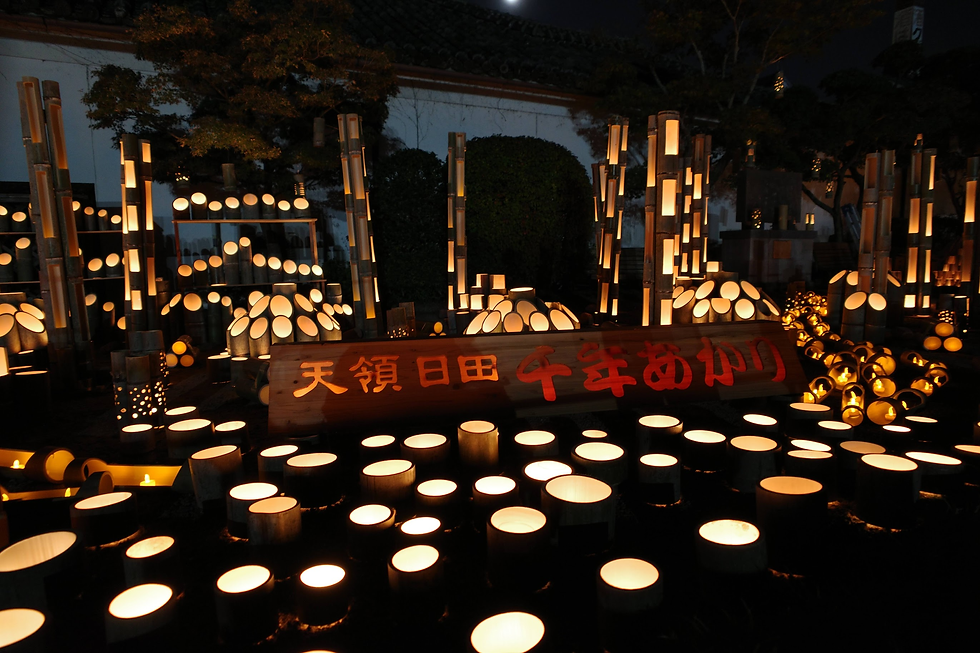
On the final evening, candles are arranged around Shinji Pond and the Taiko Bridge for Sen-tomyo. Reflections on the water and the darker shrine grounds make this one of the best times to photograph Dazaifu Tenmangu.
A kagura performance may form part of the evening programme. Viewing space close to the pond becomes crowded, so arrive early and avoid blocking the bridge or paths with a tripod.
Which evening should you visit?
The festival normally includes an outward procession and a return procession on separate dates in late September. Sen-tomyo is associated with the final evening. Exact dates, starting times and routes should be checked on the shrine’s current festival information because the annual programme can change.
Choose the outward procession if it fits your schedule and you want to see the mikoshi leave the shrine.
Choose the final evening for the returning procession and candlelit pond.
Arrive before sunset if photography is important.
Getting there from Fukuoka
From the Tenjin area, Nishitetsu trains connect to Dazaifu, usually with a change at Nishitetsu-Futsukaichi depending on the service. Save the final return train before the event begins and allow extra time to walk back through the crowd.
Festival nights can be much quieter on the approach before the procession, but the station becomes busy when events finish. Travellers staying near Hakata should remember that another subway journey may be needed after returning to Tenjin.
Pair this with: Fukuoka Transport Guide: JR, Subway or Nishitetsu?
Practical tips
Bring a light jacket; late-September evenings can feel cool while standing still.
Use a high ISO or stable support for candlelight instead of flash.
Keep voices low during ceremonies and performances.
Do not rely on an old blog timetable; confirm the current programme and final train.
Combine the evening with a daytime Dazaifu visit only if you are comfortable spending several hours in the area.
Is it worth attending?
Shinko-sai is worth attending if you want to see Dazaifu Tenmangu as an active religious site rather than only a daytime attraction. The procession is slow and restrained, while the candle ceremony gives the familiar bridge and pond a very different appearance after dark.
It is less suitable for visitors expecting food stalls, loud performances or a fast-moving parade. Come prepared to wait quietly and watch the ceremony on its own terms.
Further reading
More reading
Related guides
Fukuoka 3-Day Itinerary: A Practical First-Timer Route|Hita Sennen Akari Festival Guide: Access, Viewing Spots and Photo Tips