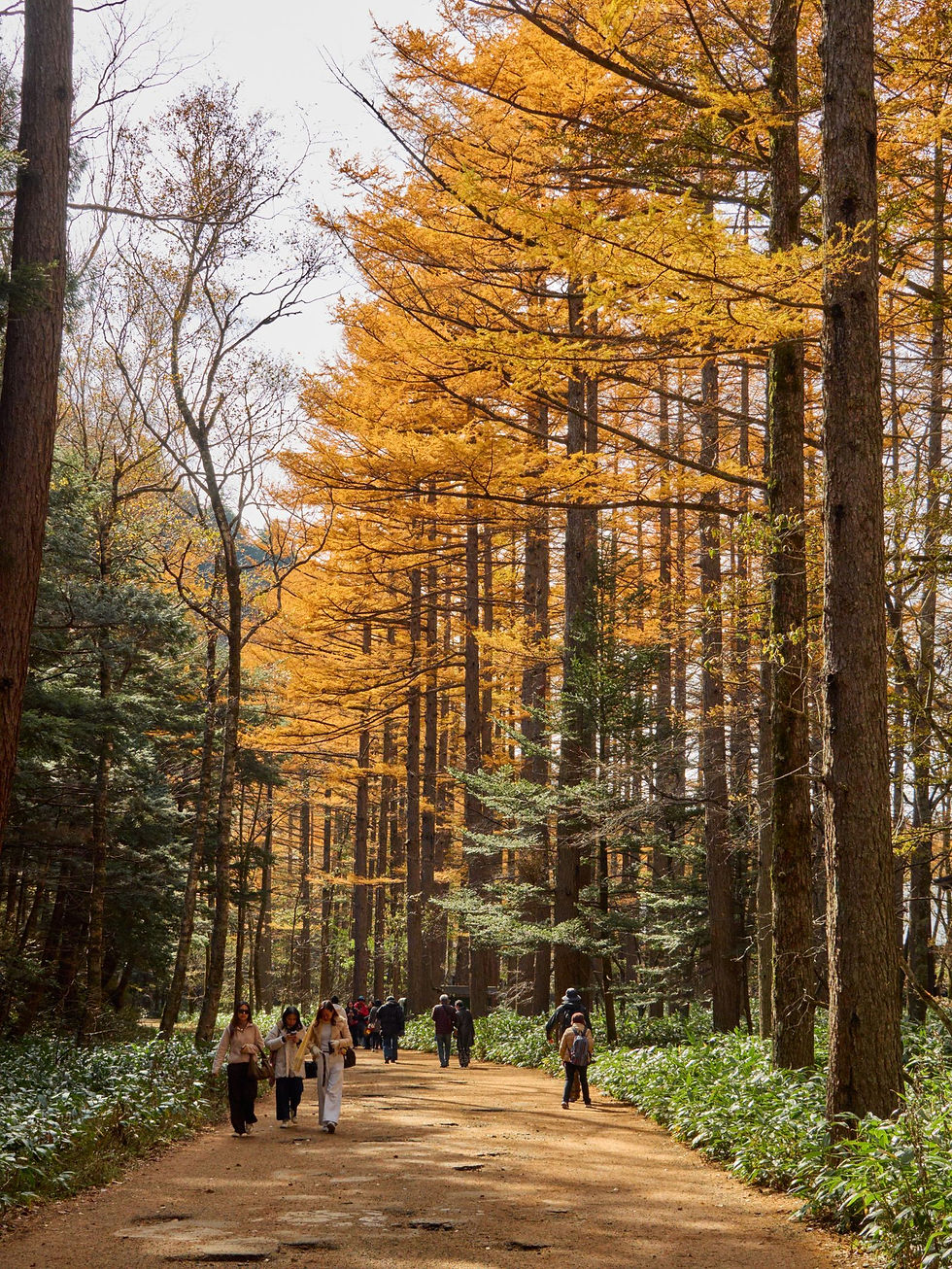
Karuizawa Autumn Leaves 2026: Kumoba Pond, Shiraito, Cycling and Trains
- cody
- 3 days ago
- 4 min read
Karuizawa autumn leaves require a zone-based itinerary. Kumoba Pond, Old Karuizawa, Hoshino, Shiozawa and Shiraito Falls do not share the same elevation or transport. A Tokyo day trip should use Kumoba and Old Karuizawa in the morning, then choose either Hoshino or Shiraito Falls. Stay one night when dawn photography, the waterfall, onsen or a second weather window matters. Cycling is useful in town; the mountain road to Shiraito is not a normal visitor route.
Last checked August 4, 2026. A precise 2026 foliage peak has not been announced. Mid-October to early November is historical planning context only. The official tourism site describes Kumoba's walking loop as about one kilometre and publishes a car-free sample route linking Karuizawa Station, Shiraito Falls, Old Karuizawa, Kumoba and Hoshino. Recheck dated buses, autumn crowd measures, parking and weather.
Five areas run on different clocks
Shiraito Falls and North Karuizawa are higher and can colour earlier. They add waterfall and forest scenery but depend on road traffic, buses and a safe return. Place the waterfall in the morning or before lunch, not as the final experiment of the day. Kumoba is the most concentrated town foliage scene and usually needs 45–90 minutes. Reflections depend on calm water, light and leaf stage; early morning reduces but does not remove crowds.
Old Karuizawa and Mikasa Avenue offer trees, churches, villas and cafés rather than one dense maple garden. They remain useful when Kumoba is green or past peak. Hoshino and Naka-Karuizawa suit afternoon woodland, Harunire Terrace and onsen, but require a bus, shuttle or taxi from the main station. Shiozawa and South Karuizawa suit gardens, museums and families; the last mile is weaker without a car.
A realistic Tokyo day trip
Reserve suitable outbound and return Shinkansen seats, then add Tokyo hotel access, station navigation, local buses and bicycle return. Start at Kumoba and Old Karuizawa. After lunch, use Hoshino for a lower-risk afternoon with food and onsen, or Shiraito for higher-elevation scenery with more transport exposure. Do not add both plus the outlet. The outlet is a rain or departure buffer, not the main foliage attraction.
A Shiraito day needs a return-first mindset. Confirm the exact stop and final practical bus before leaving town. If a service is full or delayed, retain Old Karuizawa or Hoshino rather than waiting through the afternoon. A rail pass does not reserve a seat, and the advertised Shinkansen time does not include the final mile, so an apparently short Tokyo trip can still become a long door-to-door day.
One night separates dawn, mountain access and onsen
One night is worthwhile for photography, families, seniors and travellers combining Shiraito with Hoshino. Day 1 can use Old Karuizawa and Hoshino, with an onsen or early dinner. Day 2 begins at Kumoba and then chooses Shiraito or Shiozawa according to weather. This removes the need to manage a rental bicycle, mountain bus and Tokyo return in the same afternoon.
Stay near Karuizawa Station for large cases, late trains and the outlet. Stay in Old Karuizawa for early Kumoba and walking, accepting a less convenient station transfer. Stay in Naka-Karuizawa or Hoshino for onsen and a slower two-day trip. South Karuizawa is stronger for driving and museum-focused families. Match the property to the first activity on the next morning, not only the lowest rate.
Cycling, bus, taxi or rental car
A standard or e-bike works between the station, Kumoba, Old Karuizawa and selected southern areas. Confirm hours, return location, helmet, insurance and wet-weather policy. Leaves, pedestrians and early darkness require an earlier return. Park where required and walk the pond loop. Do not ride through crowds or treat a shared narrow route as a private cycling lane.
Use the bus or taxi for Shiraito. Cycling the climb is only for riders experienced with sustained ascent, traffic, fog, wet leaves and a cold descent. A rental car helps groups and North Karuizawa itineraries, but parking, congestion, left-side driving and evening mountain roads remain. One or two travellers staying in town normally do not need a car.
Families, older travellers and luggage
For a family or senior route, combine Kumoba with one branch and retain a café, onsen or hotel break. The pond can be muddy and crowded after rain. Shiraito adds cold and waiting time. Leave full-size luggage at the station or hotel and carry a warm layer, rainwear, medication and one small day bag. After two long travel days, use the overnight version instead of adding more zones.
Compare Karuizawa hotels
Choose the next morning's zone first, then compare room, taxes, breakfast, shuttle, cancellation and inventory. These affiliate searches do not guarantee availability or price.
Rain, wind, leaf fall and cold backups
If Kumoba is green or past peak, use Old Karuizawa avenues, Hoshino, gardens, museums and cafés. When the Shiraito bus is delayed or full, do not lose the entire day waiting. Rain removes cycling and wet mountain roads; use churches, museums, outlet and onsen. Wind removes the reflection guarantee but leaves shoreline and street subjects. Frost means early bicycle return, gloves, waterproof footwear and no evening mountain-road experiment.