
Kyoto Kibune Kawadoko Guide: Fujiya Lunch, Bus 33 and Kifune Shrine Walk
- Iris

- 6 days ago
- 8 min read
Quick guide | Departing Demachiyanagi | Bus 33 from Kibuneguchi | Lunch over the river | What the bill really costs | Rain plan | Three Kifune shrines | Photo positions | Getting back | My verdict
I traded Kyoto's hottest lunch hour for two hours above the Kibune River
By July, central Kyoto can feel hot from the pavement upward. Instead of retreating into another air-conditioned mall around Shijo, I would take the Eizan Railway north and make Kibune Fujiya the anchor of the afternoon. The restaurant faces Kifune Shrine's Main Shrine and operates its summer kawadoko from May 1 through September 30. The appeal is specific: the dining deck is built directly above the river, close enough for rushing water to become the room's background sound. That beauty comes with compromises—an expensive meal, weather-dependent seating and a narrow final approach—so this is one Kyoto experience where the route and rain policy matter as much as the photograph.
An 11:00 lunch is the most practical first visit. It leaves enough time to travel from Demachiyanagi without rushing, finish around 13:00, and walk to the Main Shrine, Inner Shrine and Yui-no-yashiro before returning in daylight. Fujiya accepts its last arrival at 19:00 and serves until 20:00, but a dinner booking creates a different problem: fewer useful return options and a dark, narrow road after the meal. I would trade some evening atmosphere for a calmer journey unless I were staying locally.
The last two kilometres are the part most maps make look too easy
I treat Demachiyanagi as the real starting point. At the Eizan Railway platforms, take a train on the Kurama line and get off at Kibuneguchi; a train for Yase-Hieizanguchi branches away and will not take you there. Outside Kibuneguchi Station, transfer to Kyoto Bus 33 for Kibune. Get off at the Kibune stop and continue roughly five minutes toward the shrine. Fujiya's address is 40 Kurama Kibune-cho, Sakyo-ku, Kyoto. When the red lanterns and stone steps of the Main Shrine appear, the restaurant is across the road; there is no reason to drag luggage farther toward the Inner Shrine.
I would not walk from Kibuneguchi with a suitcase simply because the distance looks short. The riverside road is narrow, and buses, hotel shuttles, cars and pedestrians share several sections with limited pavement. Route 33 can receive extra service during the summer light-up period, while August 14–16 follows the holiday schedule, so I would reopen Kyoto Bus's current timetable on the morning of travel. Large luggage belongs at Kyoto Station or the hotel. It is awkward on the bus, on a damp dining deck and on Kifune Shrine's steps.
When I sit down, the water arrives before the food
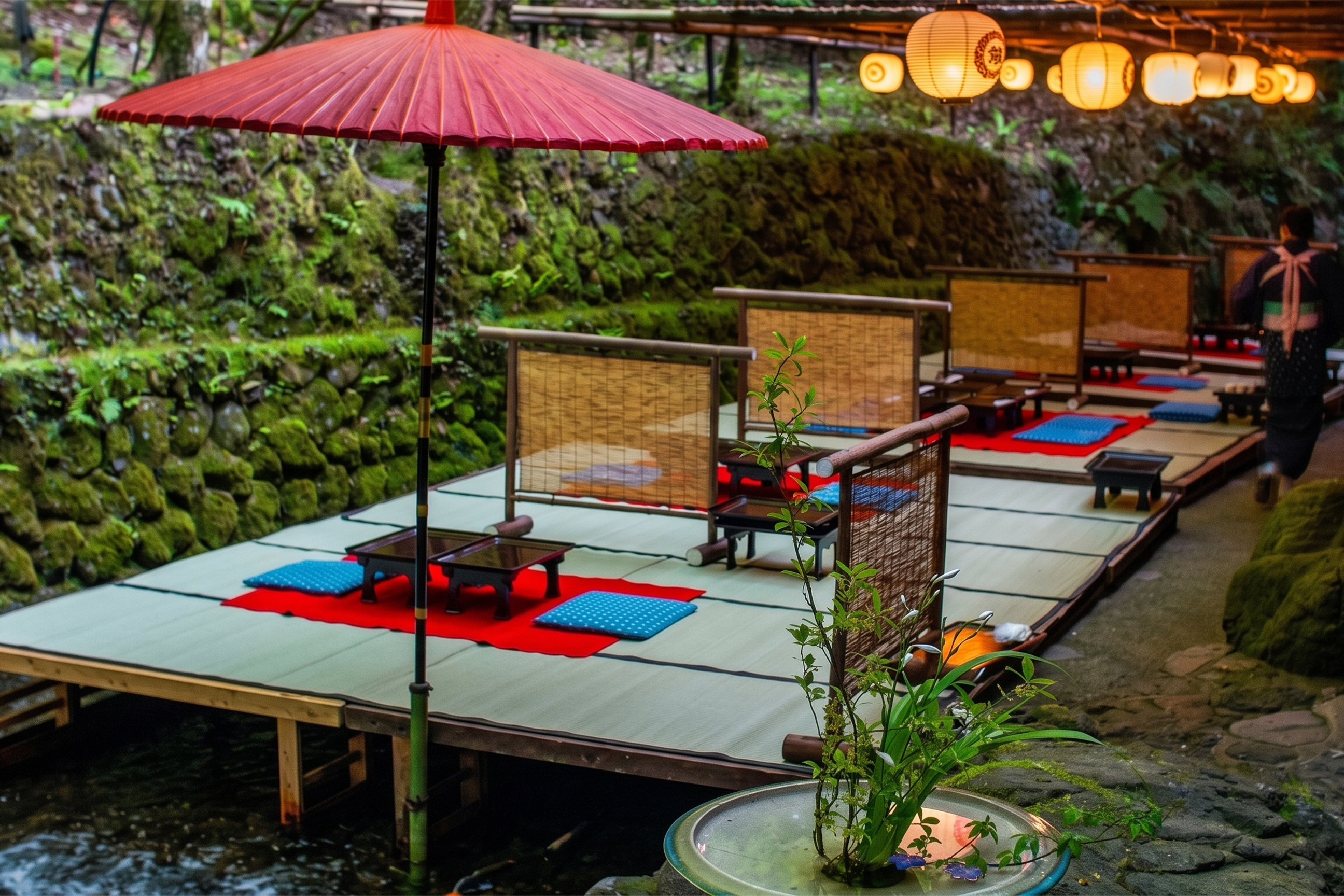
The first sensation of a kawadoko is sound. White water drops over the shallow rocks beside the deck, while red parasols, green maple leaves and Fujiya's lanterns frame the tables. It looks completely open in photographs, but guests still follow the staff through a defined service route and may need footwear that is easy to remove. I would take the wide deck photograph before the first course arrives, then stay seated. Crossing between occupied tables or leaning beyond the edge for a lower angle interferes with staff and turns a peaceful lunch into an obstacle course.
The deck is cooler than exposed streets, but it is not an outdoor refrigerator. A windless July afternoon can still be humid, while a thin layer becomes useful after sitting close to water for an hour. Insects, damp boards and splashes are part of the setting. I would wear flat, non-slip shoes, avoid trousers that trail on the floor and keep paper shopping bags off the boards. Travellers with limited mobility should ask about the easiest table location before confirming, rather than assuming every picturesque riverside seat has the same access.
Add the deck charge before deciding whether the price feels reasonable
Fujiya lists summer kawadoko service from 11:00 to 20:00, with final entry at 19:00. The lunch-only Haikazen is ¥7,500, plus a ¥1,100 summer deck charge, so the useful starting total is ¥8,600 before drinks. The ten-course Yuki kaiseki costs ¥12,650; with the deck charge, that becomes ¥13,750. Tsuki is ¥16,445 and Hana ¥18,975, again with the seat charge added. Listed menu prices include tax and service, but beverages and extra orders remain additional. I would save the final reservation screen because one missing digit or fee changes the decision significantly.
Comparisons need the correct month. Nearby Hiroya advertises an ¥8,500 seasonal lunch, but its official menu says that option is offered only in May, June and September. In July, its kaiseki begins at ¥16,500. For a budget near ¥10,000, I would first check whether Fujiya's lunch tray is bookable on my date. If I wanted Hiroya's fixed arrival slots at 11:00, 12:00, 13:00, 17:00 or 18:00 and accepted the higher bill, I would compare it separately. The useful question is not simply which deck looks best; it is which restaurant has the right month, time, rain arrangement and whole-table cost.
The ayu is not decoration; the menu follows the mountain and river
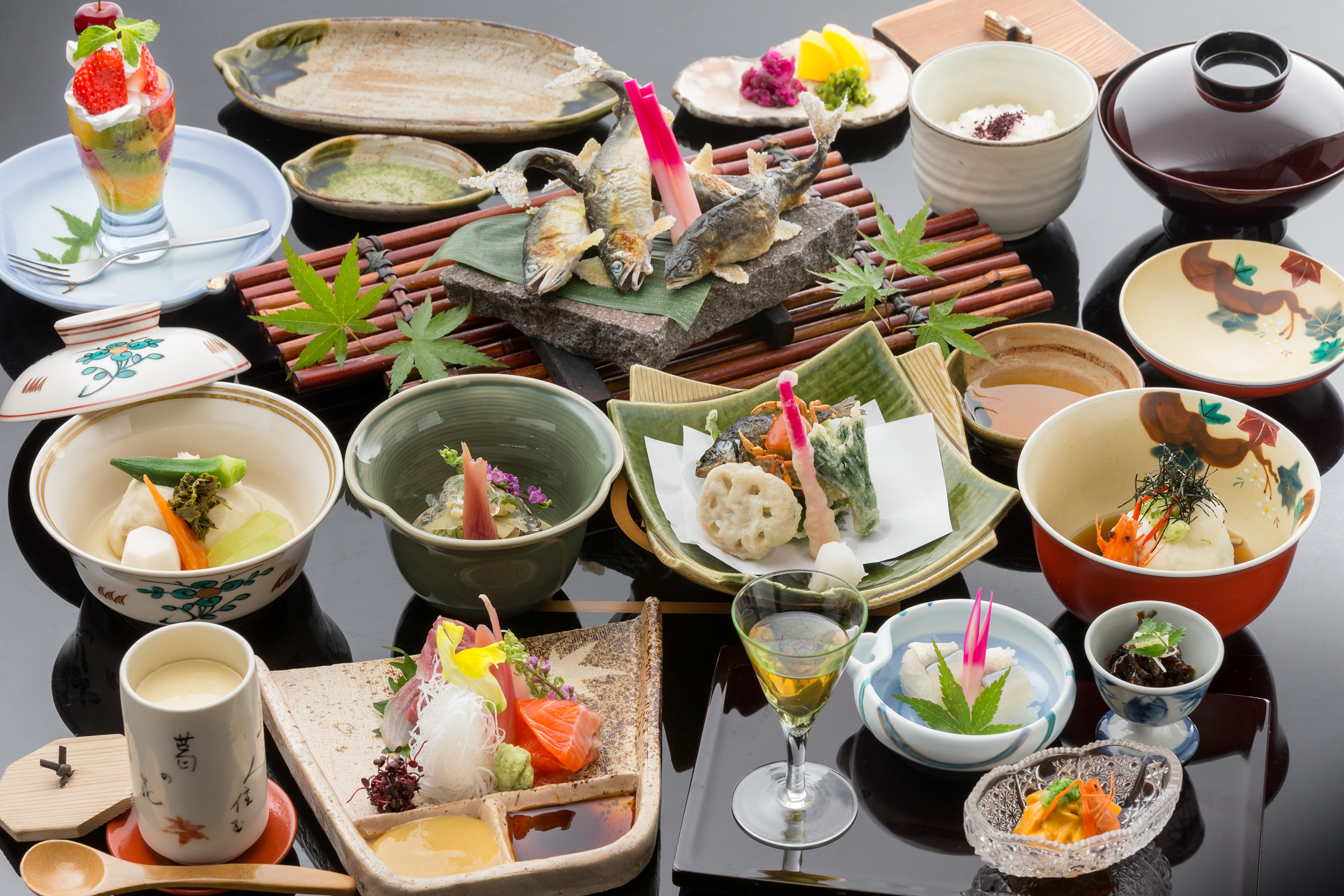
Fujiya describes Yuki as ten courses built around river fish and seasonal mountain vegetables. The clearest summer signature is salt-grilled ayu, curved on its skewer with dry, crisp skin and a gently bitter flavour that does not need a heavy sauce. Sashimi, soup, fried dishes and rice change with supply, and the restaurant notes that menus may be adjusted nearly every week. I would never treat a traveller's table photograph as a promise of the exact meal. If ayu, hamo or raw fish is essential to the visit, the right move is to ask when reserving.
A kaiseki meal here should have about two hours, not a 45-minute photo stop. The water can make spoken course explanations harder to hear, so dietary restrictions must be submitted during booking. Waiting until ten dishes are being served to disclose an allergy is neither safe nor realistic. I would eat grilled and fried items while hot and avoid delaying the table for repeated photographs. There is a fair criticism: diners who dislike river fish or judge value mainly by portion size may leave unconvinced. The price buys the sequence of seasonal cooking and the riverside setting together, not maximum volume.
Rain may not cancel lunch, but it changes what you purchased
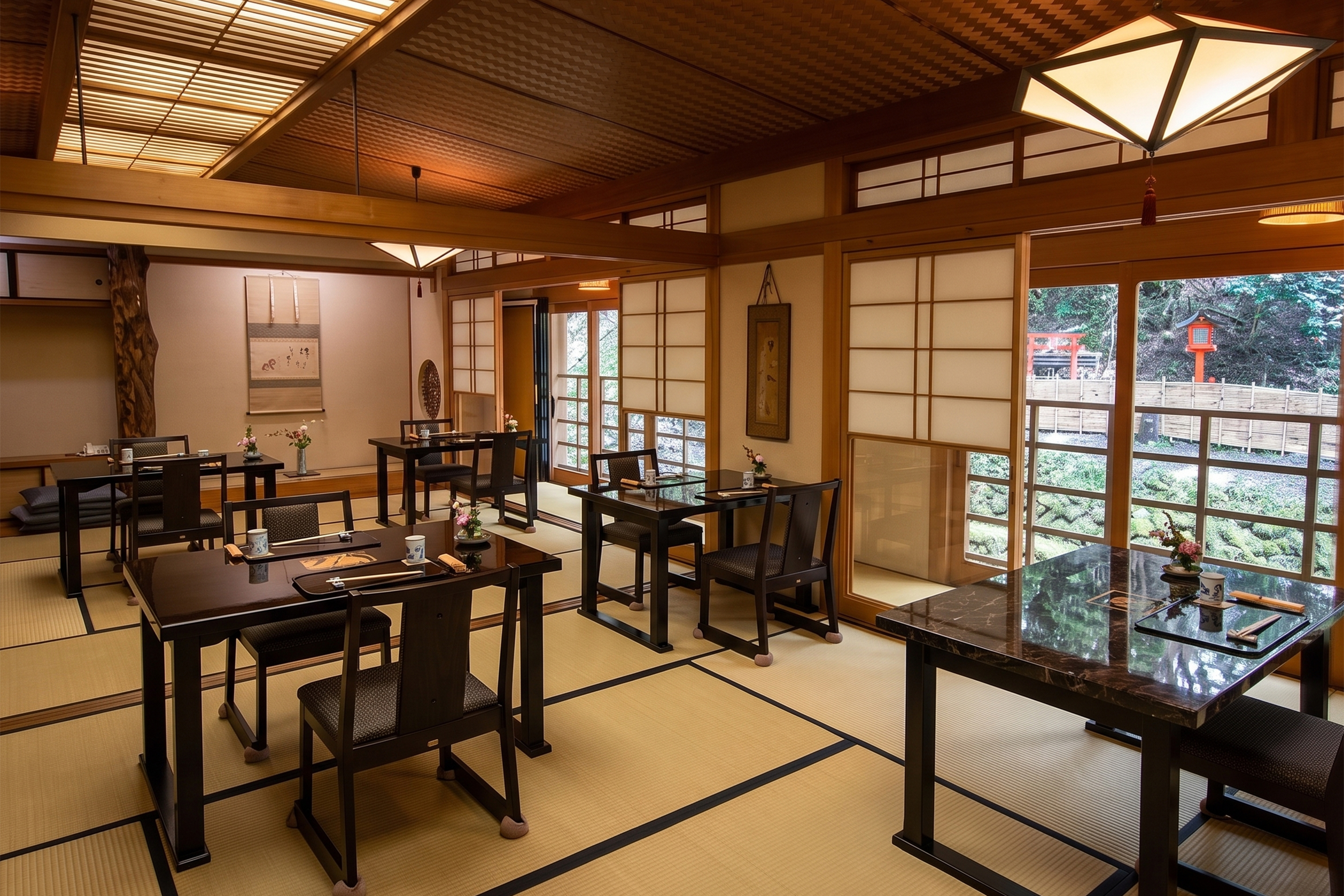
Fujiya states that rain moves dining into an indoor tatami room. High water or an unsafe river condition can do the same even when a guest's weather app looks acceptable. The indoor room still has a traditional atmosphere and a view toward the shrine side, and the meal does not suddenly lose its ingredients, but the sensation of water moving beneath the table is absent. I would define the kaiseki as the guaranteed core and the outdoor deck as the weather-dependent bonus. That expectation prevents a good meal from feeling like a failed photograph.
With showers forecast, I would not simply skip the reservation. I would call or check the restaurant's message, ask when the seating decision is made and reread the cancellation terms. Travellers who would refuse an indoor table need flexible conditions from the beginning. Conversely, guests who struggle with humidity, insects or uneven access may prefer the room. This is the most important trap in kawadoko planning: the official river photos show a real place, but they cannot guarantee that exact seat in every hour of every day.
Pair this with: if I am staying in Kyoto after this day, I would first compare Kyoto Autumn Hotels 2026: Kyoto Station, Shijo or Higashiyama?
After lunch, the lantern staircase is only the beginning of Kifune Shrine
Fujiya faces the Main Shrine, so the famous stone steps and vermilion lanterns appear as soon as I cross the road. Midday sunlight filters through leaves, creating a wide contrast between bright foliage and dark steps. I would reduce exposure slightly and shoot upward from one side near the base so the lantern rhythm and green canopy stay in the same frame. The centre is an active approach for worshippers, not a portrait set where other visitors should be asked to stop. For fewer people, photograph before an 11:00 booking or wait until one bus-sized wave has moved through. A tripod would obstruct the narrow staircase; this is a handheld location.
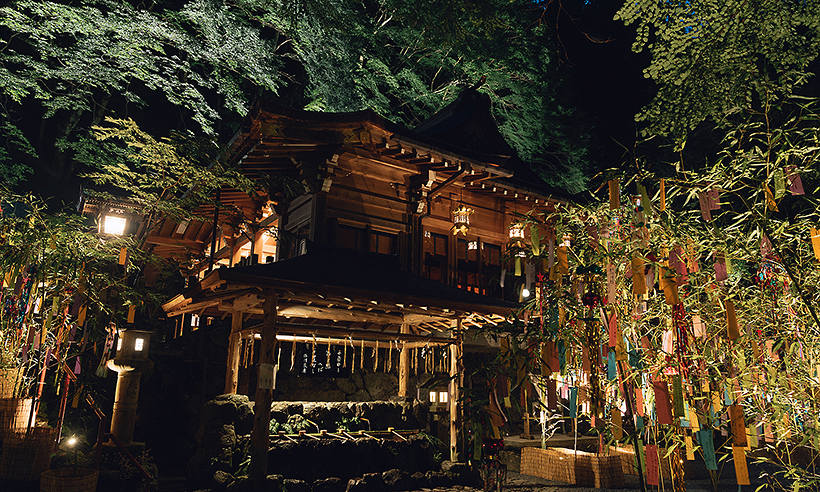
Kifune Shrine is more than that staircase. Its official three-shrine visit connects the Main Shrine, the Inner Shrine and Yui-no-yashiro. I would worship at the Main Shrine and try the water fortune first, then follow the river to the Inner Shrine and visit Yui-no-yashiro between the two on the return. The fortune paper is placed on sacred water until the characters appear; the offering is ¥200. From May 1 to November 30, the shrine grounds open 06:00–20:00, but the office is 09:00–17:00. That earlier office closing matters for goshuin and amulets even when the grounds remain accessible.
The walk to the Inner Shrine shows whether the day has been planned honestly
The route from the Main Shrine to the Inner Shrine passes restaurants, inns, river views and a tight roadway. A map's walking estimate does not include photographs, yielding to vehicles or slippery patches after rain. I would reserve 60–90 minutes for the full three-shrine circuit. The Inner Shrine feels quieter, with tall cedars and stone lanterns changing the mood after the busy Main Shrine, while Yui-no-yashiro is associated with matchmaking. The road demands attention: when a bus or shuttle appears around a bend, pedestrians should move into single file rather than continue side by side while looking at phones.
I would confirm toilets around the Main Shrine or before leaving the restaurant. This is not a central shopping street with a convenience store at every turn. Carry water in summer and carry the packaging back out. If heavy rain begins, somebody develops foot pain or the bus queue is already growing, I would shorten the visit to the Main Shrine and protect the return journey. Making the Inner Shrine a compulsory tick can turn a reflective walk into a rushed, unsafe one.
The most practical return photo is an offline screenshot of the bus timetable
The return reverses the route: Bus 33 from Kibune to Kibuneguchi, then the Eizan Railway to Demachiyanagi. Lunch finishing times and light-up departures create waves, so I check the next two buses rather than building the plan around the last one. If one vehicle cannot take the whole queue, I stay in the lit waiting area instead of standing in the road. Walking to Kibuneguchi can take roughly half an hour, but it is only a fallback in daylight, stable weather, good shoes and no luggage. I would not propose that narrow road after dark or in rain.
My verdict has two honest sides. Kibune kawadoko turns Kyoto's summer into something audible and physical: water beneath the deck, ayu and mountain vegetables on the table, then a shrine walk instead of an immediate train ride home. It is also costly, vulnerable to weather and less forgiving than a city-centre lunch. I would choose it when the atmosphere and the full afternoon are worth paying for. If the goal is simply to eat generously, or the itinerary cannot tolerate any seating change, central Kyoto has better answers. The experience works best as one continuous rhythm—sit down at 11:00, enter the shrine after 13:00 and return safely before the mountain road becomes the day's final problem.
Related guides
Related guide: for another Kyoto summer evening with specific viewing and transport decisions, read Kyoto Gozan Okuribi 2026 Guide: Lighting Times, Viewpoints and Transport
More to read
More to read: compare where to stay and what the return journey costs in Kyoto Autumn Hotels 2026: Kyoto Station, Shijo or Higashiyama?


