
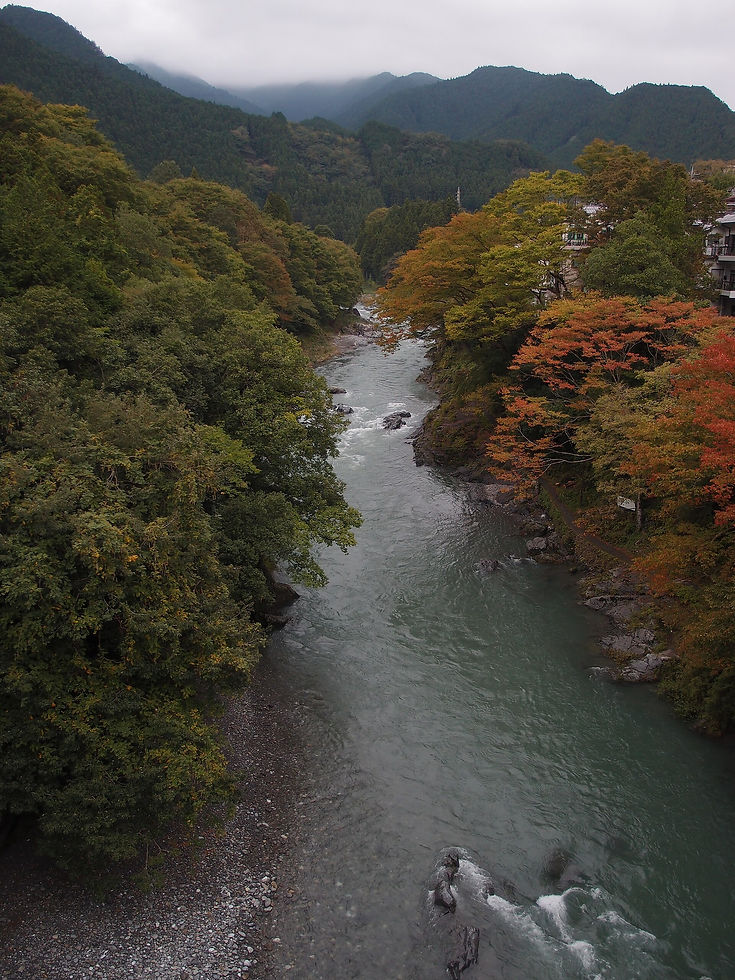
Okutama Autumn Leaves Guide: Mitake Gorge, Lake Okutama and Car-Free Routes
- cody
- 4 days ago
- 4 min read
Okutama autumn leaves are spread across separate rail stops and bus branches rather than one compact park. Mitake Gorge is the strongest first car-free choice, Okutama Station and Hikawa work for a half day or uncertain weather, Lake Okutama is for visitors who prioritise the dam and water scenery, and Nippara Cave is a separate full-day bus branch. Select one primary zone and keep a nearby rail-stop alternative; combining a complete Mitake walk, the lake and Nippara creates more waiting than sightseeing.
Last checked August 4, 2026. A live 2026 foliage report has not yet been published. Okutama Visitor Center continues to issue current trail, road and bear notices; the Otama Walking Trail fully reopened on April 24 after spring bridge work, while other forestry roads and mountain routes still have long-term or construction closures. Recheck the JR Ome Line, Nishi Tokyo Bus, floating bridges, water level, trail status and bear notices on the travel morning.
Mitake Gorge: the most reliable first car-free route
From Shinjuku or Tokyo, travel through Tachikawa and Ome to Mitake; hotel-to-trail time is commonly 90 minutes to two hours. Descend from Mitake Station to the Tama River and walk toward Sawai. A short 90-minute section, a two-to-three-hour riverside route or a longer version with a brewery and lunch can all use different JR stations as exits. This flexibility is why Mitake works better than the lake for a first visit, families and older travellers.
Use the flatter river section with children or reduced mobility and exit at Sawai or Ikusabata rather than completing every path. Wet rock, timber and river edges become slippery after rain, so shorten the route and keep Ome cultural stops or a station cafe as backup. Do not add Mount Mitake, the complete gorge and Lake Okutama to the same day; each transfer removes daylight and a safe return margin.
Okutama Station and Hikawa: the half-day fallback
When the morning begins in Tachikawa or Ome or the afternoon weather is uncertain, continue to Okutama Station. Check the visitor centre's latest information before using Hikawa Gorge, bridges or a station-area path. The current visitor centre is generally open 09:00–16:30, closed Monday and around New Year, and free; verify the exact day. This plan avoids a low-frequency rural bus and makes it easier to return before darkness.
The Otama Walking Trail can be used as a station-to-station route around Kori, Hatonosu and Shiromaru. Spring 2026 bridge work temporarily closed a section before full reopening, which demonstrates why the complete trail should never be assumed permanently available. Choose one or two rail-station segments rather than turning the entire trail into a compulsory all-day hike.
Lake Okutama: choose the return bus before the walk
Lake Okutama requires a Nishi Tokyo Bus from Okutama Station and peak foliage buses may fill. Identify at least two return departures before leaving the station, then plan Ogouchi Dam, viewpoints and a short shore. The long southern Ikoi path is about 12 kilometres and four hours, not a casual extension. Most visitors should use the dam area or a roughly 2.5-kilometre section and keep time for the queue.
Floating bridges can close because of water level, wind, maintenance or an official safety decision. An old photograph does not prove same-day access. If the bridge is closed, keep the dam, lake view and short shore instead of chasing another bridge. If the bus is delayed, delete the second lakeside section. Never walk along a narrow highway toward another stop because the return plan failed.
Nippara Cave: a separate branch with physical constraints
Nippara Cave does not share the Lake Okutama bus. The cave requires a bus plus a short approach and remains around 11°C, with wet floors, narrow spaces and steep stairs. It is not a risk-free rainy-day interior. Confirm the day's bus, road and opening information, preserve a return margin before entering and choose the station-area route for knee problems, claustrophobia, very young children or uncertain mobility.
Nippara and surrounding areas continue to carry road and trail notices. An open cave does not authorise an unverified forestry road or mountain trail. If the outbound journey is already late, remain around Okutama Station rather than forcing the branch. Missing the bus and walking a narrow road is not a viable rescue plan.
Transport, bear notices and luggage
JR and many Nishi Tokyo Bus services accept Suica or PASMO, but carry cash and save timetables, Japanese stop names and the hotel phone offline. Okutama had temporary 2026 trail closures after bear incidents; a later reopening is not a guarantee of no risk. Make noise on nature paths, follow current rules, avoid exposed food and change the route immediately when a closure applies. Ordinary foliage visitors should not leave the recognised path to obtain a photograph.
Leave the main suitcase in Tokyo, Tachikawa or Ome or forward it. Do not assume rural lockers are available on a foliage weekend. Carry medication, warm layers, rain protection and a power bank in an overnight bag. Cold, weak signal and photography drain batteries, and an eSIM does not replace an offline final bus or a written hotel address.
Hotel bases and all existing booking options
Tachikawa is the strongest first base for large luggage and a second western-Tokyo day. Ome supports a slower two-day trip and onsen. Hachioji is more convenient for Mt. Takao and requires travel back through Tachikawa and Ome for Okutama. Arasawaya and Kankoso suit an overnight near Okutama Station but need advance confirmation of dinner, payment, English communication and cancellation. These are location examples, not availability or fixed-rate claims.
JR-East Hotel Mets Tachikawa
KAMENOI HOTEL OME
Keio Plaza Hotel Hachioji
Backups: Arasawaya and Kankoso
Plan B and related planning
When the Ome Line is late or a bus is full, stay near Mitake, Hatonosu or Okutama Station rather than forcing another branch. When a floating bridge is closed, retain the dam and short shore. In heavy rain, high water or strong wind, cancel river edges, long lake paths, bridges and Nippara. If colour is early or past peak, retain the valley, lake, museums and cave without claiming peak foliage.
