

Tohoku Summer Festival One-Week Itinerary 2026: Morioka, Aomori, Akita and Sendai
- Iris

- 1 day ago
- 6 min read
Early August in Tohoku creates an unusual planning problem: several of Japan’s strongest summer festivals overlap almost perfectly. Morioka Sansa Odori runs August 1–4, Aomori Nebuta August 2–7, Akita Kanto August 3–6, and Sendai Tanabata August 6–8. Change cities after every night event and the trip quickly becomes a study in last trains and exhausted mornings.
A better seven-day route makes the festivals the fixed points and moves between cities during daylight. For 2026, the cleanest rhythm is Morioka on August 1, Aomori on August 2, Akita on August 3–4, and Sendai on August 5–7. Yamagata Hanagasa can be added on the final evening only if you are willing to stay in Yamagata that night and leave on August 8.
Let the festival calendar decide the geography
On a map, it is tempting to travel steadily north from Tokyo. The event dates make a different order more practical. Sansa starts first, Nebuta begins the following night, Kanto starts August 3, and Sendai Tanabata does not begin until August 6. That turns Morioka → Aomori → Akita → Sendai into a natural sequence instead of a geographic zigzag.
Festival-night hotels are often the hardest part to replace. Treat Morioka, Aomori, Akita and Sendai accommodation as the skeleton of the itinerary; daytime sightseeing is optional.
Seven days at a glance
Day 1, Aug 1 — Arrive in Morioka, keep the afternoon light, watch Sansa Odori from 18:00, sleep in Morioka. Day 2, Aug 2 — Travel to Aomori around midday, watch the first nighttime Nebuta parade from 19:00, sleep in Aomori. Day 3, Aug 3 — Leave Aomori before the afternoon gets late, reach Akita, watch Kanto from 19:10, sleep in Akita. Day 4, Aug 4 — Do not change hotels. See the daytime skills event, eat properly, rest, then watch Kanto again or take an early night. Day 5, Aug 5 — Take the Akita Shinkansen to Sendai, check in, then watch the Sendai Tanabata Fireworks from 19:30 to 20:30. Day 6, Aug 6 — Spend the full day with Sendai Tanabata’s shopping-arcade decorations and central-city atmosphere. Day 7, Aug 7 — Stay in Sendai for a relaxed finish, or travel to Yamagata in the afternoon for Hanagasa and sleep there.
Day 1: Morioka Sansa is the right opening night because the parade starts before the other giants
The official Morioka Sansa schedule runs every August 1–4, with the main parade beginning at 18:00 on Chuo-dori. Light rain normally does not cancel the parade. The smart move is to arrive in Morioka by mid-afternoon, leave luggage at the hotel and eat before heading to the route.
Do not squeeze in Hiraizumi, Hanamaki and Koiwai just because daylight remains. Saving energy on Day 1 matters more than adding another daytime attraction.
Day 2: Aomori Nebuta deserves the evening to itself
The Aomori Nebuta Festival runs August 2–7. On August 2 and 3, the nighttime parade starts at 19:00; from August 4–6 it starts at 18:45. Reserved seats for overseas visitors are listed at ¥4,000 plus service fees, but a ticket is not required to watch from the public route.
For the full festival mechanics, use Aomori Nebuta 2026 Guide: Dates, Reserved Seats, Haneto and Marine Finale. August 2 includes both children’s Nebuta and large Nebuta, giving the first night a slightly different character from the later all-large-float evenings.
Hirosaki Neputa overlaps with the same period, but trying to commute to Hirosaki and back on this single evening weakens both experiences. Add a night if seeing both is important; do not turn dinner, luggage storage and viewing position into a race.
Day 3: leave Aomori before late afternoon and give Akita Kanto the whole night
Aomori to Akita is not a Tokyo-suburban hop where another train appears every few minutes. Lock in a daytime connection first, then build breakfast and checkout around it. The goal is to arrive in Akita with enough time to check in, eat and walk to Kanto Odori without dragging a suitcase through the event zone.
For August 3, the official 2026 Kanto schedule shows traffic restrictions from 18:15, performance starting at 19:10, the interactive fureai-kanto period from 20:25 and a new drone show at 20:35, with the evening ending around 21:00. See Akita Kanto Festival 2026 Guide: Dates, Seats, Day Contest and Hotels for the viewing details.
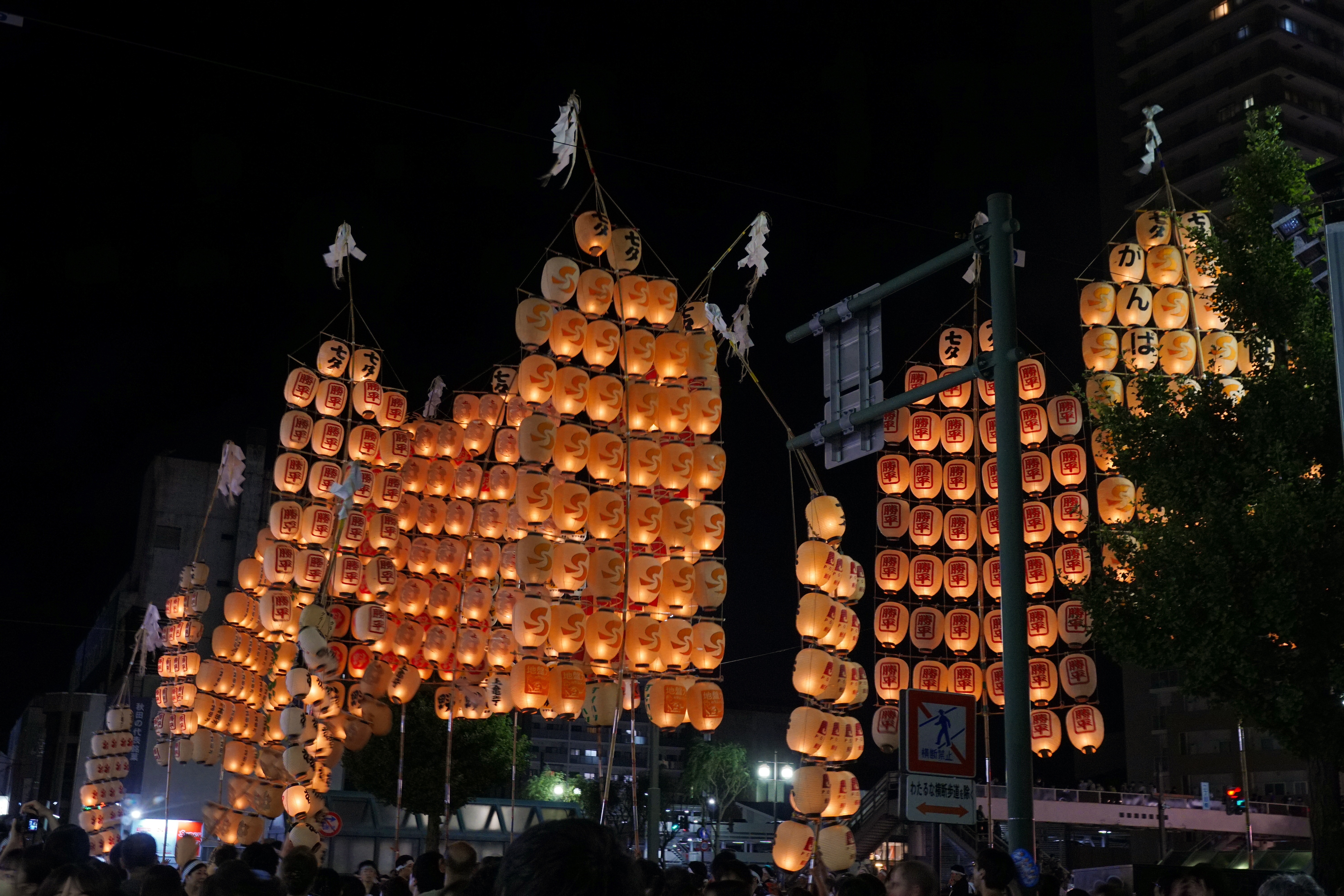
Akita Kanto at night. Photo: 掬茶 / Wikimedia Commons, CC BY-SA 4.0.
Day 4: staying two nights in Akita is the itinerary’s insurance policy
After two consecutive festival nights, the worst decision is another 06:00 suitcase transfer. Keep the same hotel. Use the daytime Kanto skills competition, local food and a proper afternoon rest to reset. Then watch a second section of the parade, or simply go back early.
This “slow” day is what prevents the final Sendai stretch from becoming pure fatigue. Tohoku can still be hot in August, and a night festival usually means far more standing than your phone’s itinerary makes obvious.
Day 5: move to Sendai in daylight, then use the fireworks as the evening event
The Akita Shinkansen provides a direct route south to Sendai. Festival-season extra trains are helpful, but they should not be the foundation of your plan. Reserve a daytime train that puts you in Sendai early enough to check in before the fireworks crowd builds.
The 57th Sendai Tanabata Fireworks Festival is scheduled for August 5, 2026 from 19:30 to 20:30 around Aobayama Park, the Hirose River area and Kawauchi, with about 16,000 fireworks. The official policy is rain or shine, with cancellation in severe weather and no postponement. After the show, sleep in central Sendai rather than attempting a late transfer to Tokyo or Yamagata.
Day 6: Sendai Tanabata changes the pace completely
Sendai Tanabata runs August 6–8. The giant paper-and-bamboo decorations fill central Sendai and the shopping arcades, so the experience is less about chasing a moving parade and more about walking the city slowly. That makes it the ideal lower-intensity day after four evenings of transport and crowds.
Use Sendai Tanabata 2026 Guide: Dates, Arcade Route, Hotels and Matsushima for the central route and practical details.
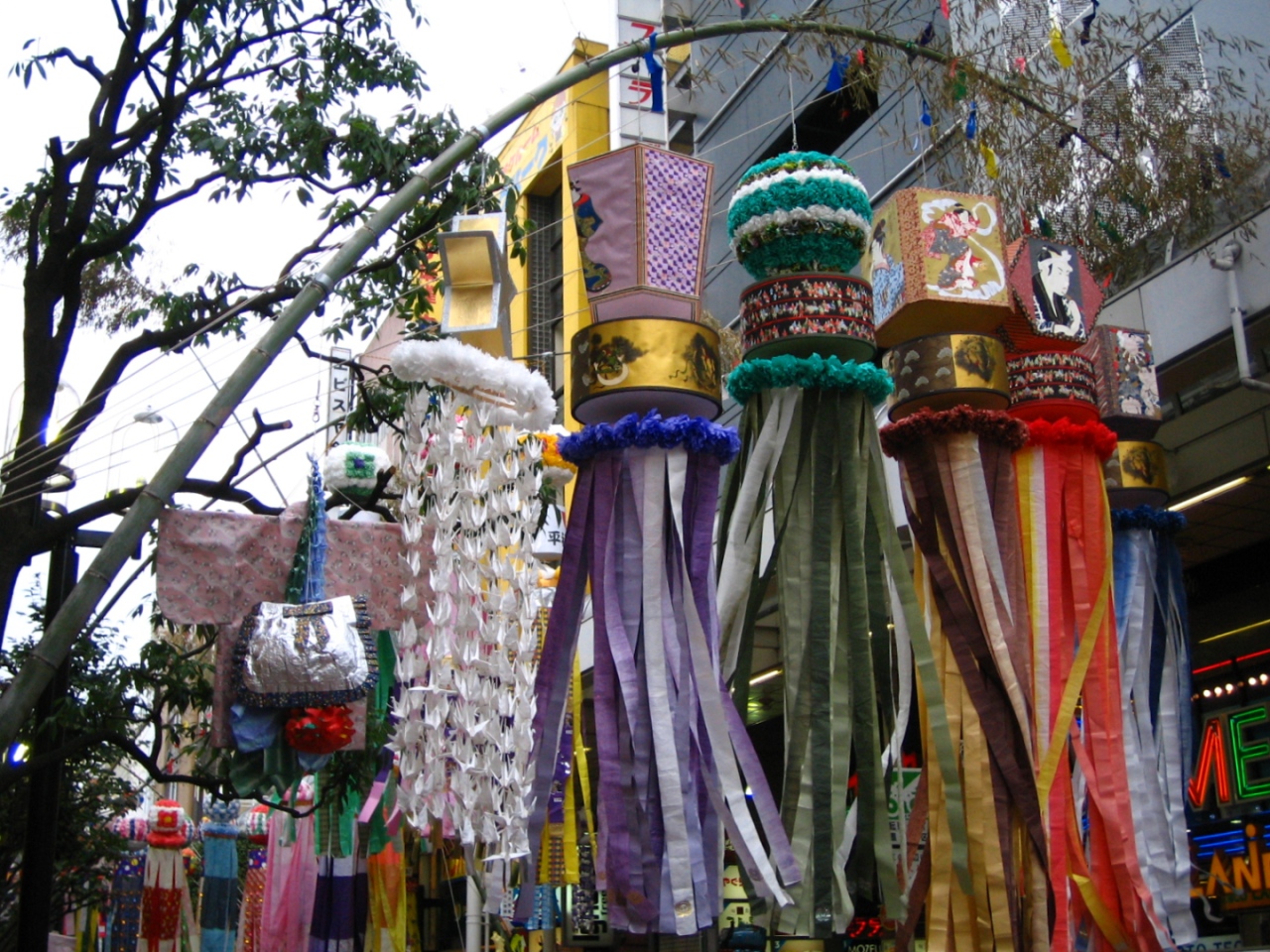
Sendai Tanabata decorations. Photo: Haseyu- / Wikimedia Commons, Public Domain.
Do not schedule Yamadera on the same day just because it looks close on the map. The point of Day 6 is recovery: walk the arcades, eat gyutan or cold noodles, go back to the hotel for a break, then return to the centre in the evening.
Day 7: finish in Sendai, or add Yamagata Hanagasa only if you stay overnight
The conservative version stays in Sendai. August 7 is still a full Tanabata day, so you can finish any arcades you skipped, make a short Matsushima side trip, or simply leave by Shinkansen in the evening.
The higher-density version adds Yamagata Hanagasa. The festival runs every August 5–7 from 18:00 to around 21:45, with the parade beginning at 18:10. The venue is roughly a ten-minute walk from JR Yamagata Station. This works only when Yamagata is your final overnight stop; watching the full parade and then racing back to Tokyo defeats the logic of the entire week.
Where paid seats are most useful
Morioka and Aomori are both watchable without reserved seating. In Aomori, public viewing along the route remains possible even when reserved seats are sold. If your budget is limited, spend on the night where sitting matters most rather than buying seats in every city.
Akita has clearer 2026 seat tiers: S seats ¥4,500, A seats ¥4,000, B seats ¥3,500, and six-person box seating at ¥28,000. Travellers who struggle with long periods of standing, or who are travelling with older family members, may get more value from paying in Akita than anywhere else on this route.
Book the three intercity legs before filling the daytime gaps
The key transport days are Morioka → Aomori on August 2, Aomori → Akita on August 3, and Akita → Sendai on August 5. Once accommodation is fixed, reserve those three movements. Restaurants, museums and even the second Kanto evening are easier to change than a sold-out festival-period train.
Temporary festival trains are a useful bonus, not a guarantee. Re-check the actual timetable for your travel date before departure, particularly around the Aomori and Akita evening peaks.
In bad weather, cut daytime excursions before cutting the festival nights
Aomori Nebuta has rain procedures, Morioka Sansa generally continues in light rain, and Yamagata Hanagasa is also designed to run in rain unless weather becomes severe. The fireworks are more weather-sensitive. The right backup strategy is not to redraw all seven days—it is to remove Hirosaki on Day 2, Oga on Day 4 or Yamadera on Day 6 and protect the evenings you travelled to Tohoku to see.
By the end of the week, the memories are not seven hotel check-ins. They are the Sansa drums in Morioka, illuminated Nebuta in Aomori, lantern poles rising above Akita and Tanabata streamers filling Sendai. The route works because every night has one job, and almost all the moving happens while the sun is still up.


