

Tokyo Rainy-Day Indoor Itinerary: Tokyo Station to Ginza Without Getting Soaked
- Iris

- 1 day ago
- 5 min read
A rainy day in Tokyo gets tiring for a surprisingly mundane reason: the umbrella cycle. You open it, close it, shake it dry, carry it through a station, then step outside for six minutes and start again. Instead of forcing a sunny-day plan through bad weather, this route keeps most of the day on one compact axis—Tokyo Station to Ginza—so the weather changes the mood, not the entire itinerary.
The point is not to spend eight hours inside shopping malls. The morning uses Tokyo Station as a dry buffer, lunch moves into KITTE and a free museum, and the afternoon shifts only one short subway ride to Ginza for a weather-proof headline attraction. If the rain eases, you can add a street walk. If it gets worse, the core plan still works without rebuilding the day.
Start before 10:00 at Tokyo Station, where the underground level buys you time
Begin on the Yaesu side at First Avenue Tokyo Station. Tokyo Okashi Land opens from 9:00, while Tokyo Character Street runs from 10:00 to 20:30. That staggered opening is useful on a wet morning: arrive around 9:30, browse sweets and gifts first, then move into Character Street once the shops are fully open.
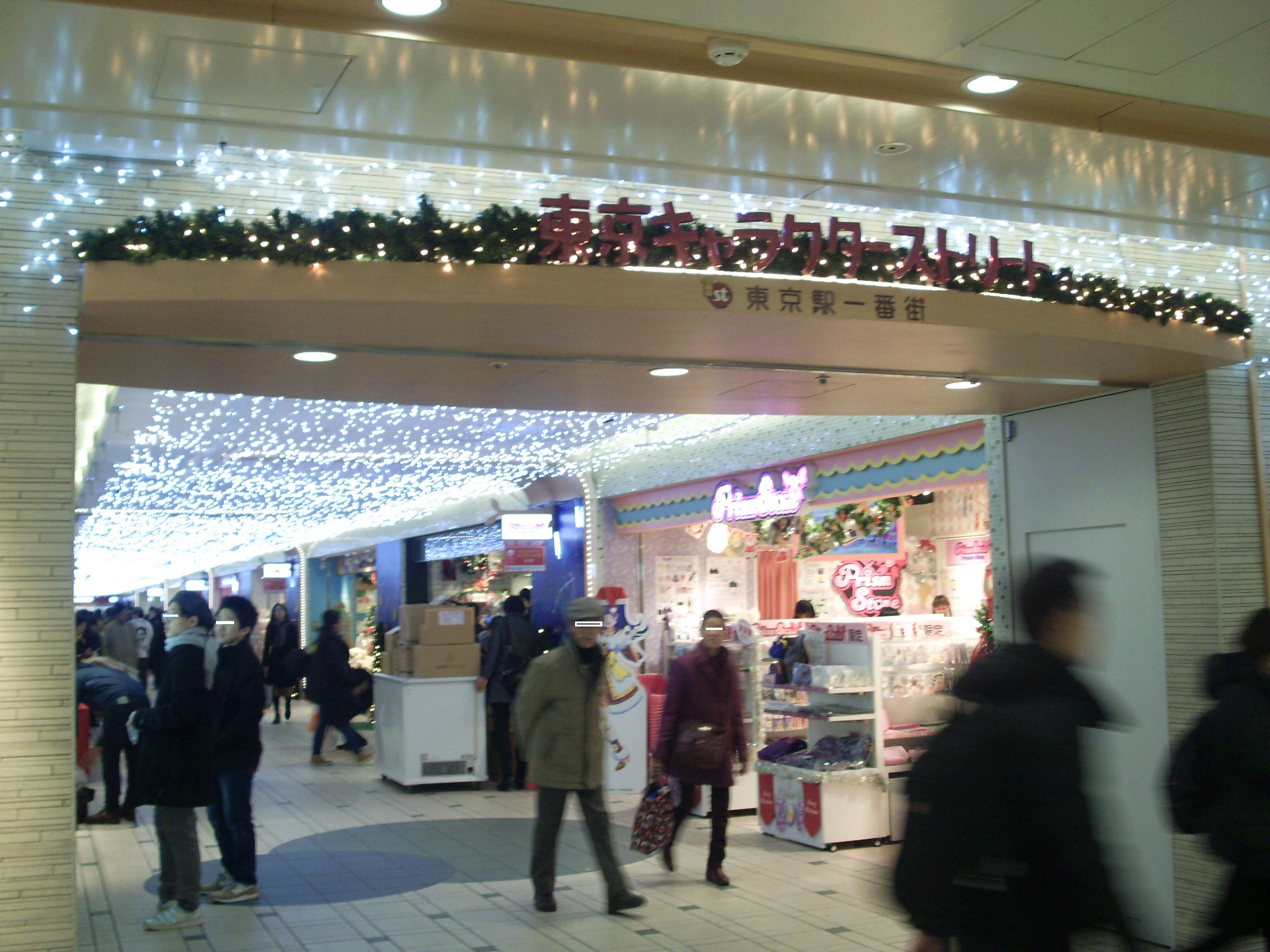
Tokyo Character Street inside First Avenue Tokyo Station. Photo: Dr.yellow / Wikimedia Commons, CC BY-SA 4.0.
You do not need to visit every character shop. Give it 60 to 90 minutes if merchandise is part of the fun; otherwise treat it as a dry transition period after breakfast. This is also the best time to deal with luggage. The afternoon Art Aquarium Museum does not provide lockers inside, so leaving a suitcase until later creates exactly the kind of wet-weather friction this itinerary is designed to avoid.
At 11:00, move to KITTE for a museum that does not require you to keep spending
From Tokyo Station, move toward the Marunouchi side and enter JP Tower KITTE. The more useful stop is not another retail floor but JP Tower Museum INTERMEDIATHEQUE on the second and third floors. Admission is free. Current opening hours are 11:00 to 18:00, extended to 20:00 on Fridays and Saturdays; Mondays are normally closed, with the closure shifting to Tuesday when Monday is a national holiday.
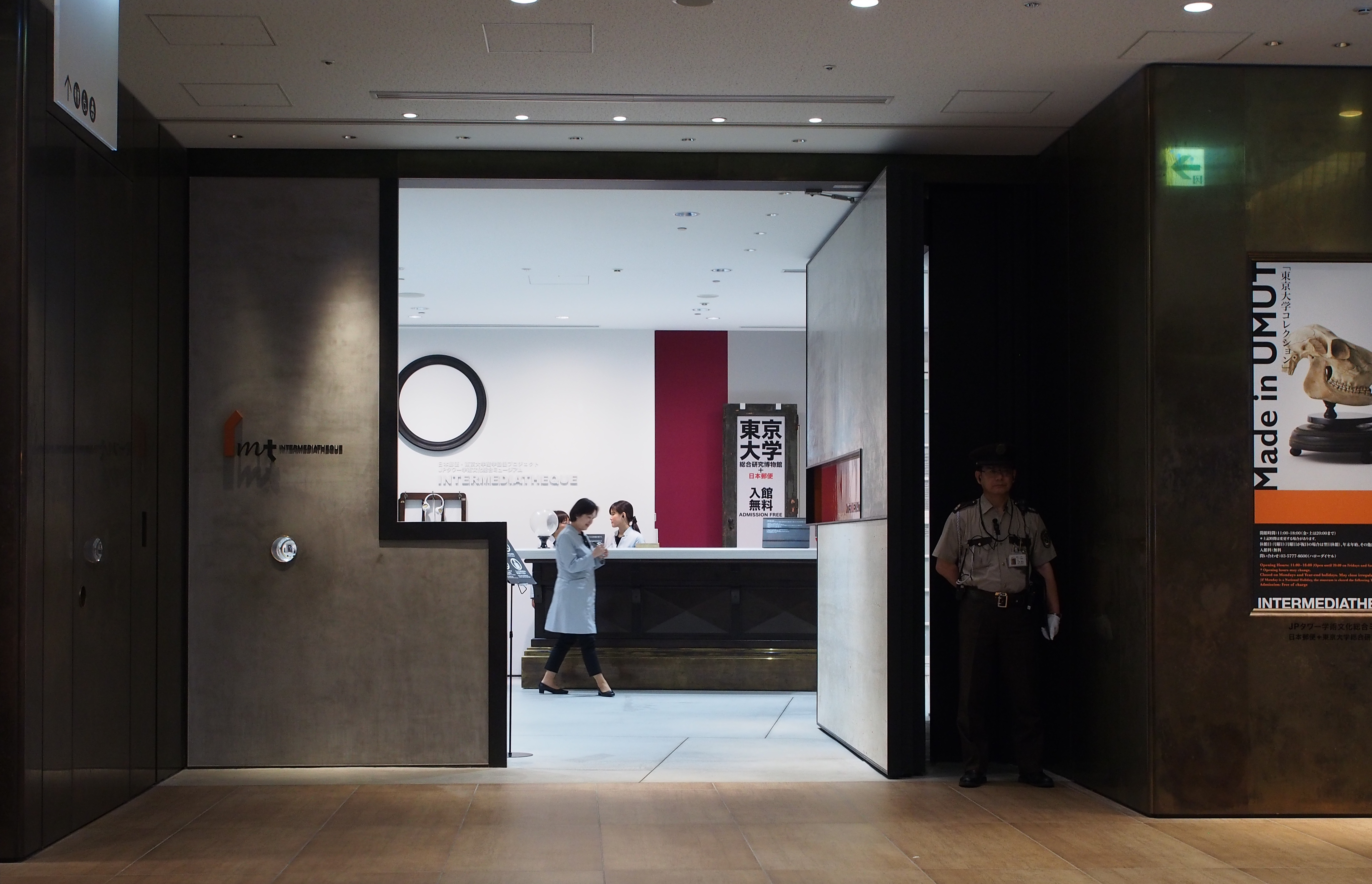
INTERMEDIATHEQUE in KITTE. Photo: Kestrel / Wikimedia Commons, CC BY-SA 4.0.
The collection mixes University of Tokyo academic specimens, natural-history objects and old display furniture, so it feels like a real museum stop rather than a way to kill time in a mall. Plan roughly 60 to 90 minutes. Umbrellas are not allowed in the exhibition rooms, and large wheeled bags must be left in the lockers provided. Personal photography is generally allowed outside prohibited areas, but video, flash and tripods are not.
Around 12:30, have lunch in KITTE or around Tokyo Station. Keeping lunch in the same area matters more on a rainy day than chasing one famous restaurant across town.
After lunch, take the Marunouchi Line to Ginza instead of walking the surface streets
Tokyo Station to Ginza is a short direct ride on the Marunouchi Line. This tiny transfer is what keeps the afternoon manageable. You avoid walking from JR Yurakucho through wet intersections, and you also avoid splitting the day across Shibuya, Shinjuku and Ikebukuro just because they all have indoor attractions.
“Underground connected” does not mean zero walking. Tokyo stations still involve corridors, stairs, elevators and detours. For travellers with children, older family members or bulky bags, the goal should be fewer street crossings and fewer umbrella changes, not the absolute shortest distance in metres.
Use Art Aquarium as the main afternoon attraction because grey skies do not dilute it
Art Aquarium Museum GINZA inside Ginza Mitsukoshi works especially well in bad weather because the experience is built around dark rooms, illuminated tanks and installation lighting. Current hours are 10:00 to 19:00 with last admission at 18:00. General web tickets are ¥2,500, same-day ticket-machine admission is ¥2,700, and student web tickets are ¥2,200.
A 14:00 to 15:30 slot gives the day a clear centre. Photography and video are allowed, but flash and supplementary lighting are not. Food and drink are restricted, strollers are not allowed inside, and there are no baggage lockers within the museum. One adult or student ticket allows up to two elementary-school-age children or younger to enter free; additional children require tickets under the museum’s rules.
This is why luggage should have been handled in the morning. Rainy-day planning succeeds or fails on small access rules more often than on the attraction itself.
After 16:00, stop chasing “must-sees” and let GINZA SIX absorb the rest of the day
After the aquarium, keep the evening in Ginza. GINZA SIX is useful because it can stretch or shrink depending on your energy: coffee, Tsutaya Books, food floors, shopping and dinner are all under one roof. Its official access information also makes it easy to approach from the Ginza subway network without turning the transfer into another long street walk.
Do not build the day around the rooftop garden. It is a bonus when the weather improves, not the core rainy-day attraction. In poor conditions, staying inside is the smarter move. The same logic applies to luggage services: useful when available, but never something to rely on at the last minute during a busy afternoon.
The whole day works with only five time anchors
09:30 — First Avenue Tokyo Station and Tokyo Okashi Land. 10:00 — Tokyo Character Street. 11:00 — KITTE and INTERMEDIATHEQUE for 60–90 minutes. 12:30 — Lunch around Tokyo Station, then Marunouchi Line to Ginza. 14:00–15:30 — Art Aquarium Museum GINZA, followed by GINZA SIX from around 16:00 onward.
The empty space is deliberate. Rain adds hidden time inside stations, at umbrella stands, around elevators and in queues. A schedule with 20 or 30 minutes of slack survives real Tokyo far better than six timed museum reservations.
Monday needs a different rhythm because INTERMEDIATHEQUE is normally closed
On Monday, do not arrive at KITTE and improvise after finding the museum shut. Extend the Tokyo Station section until around 11:00, eat earlier, then move to Ginza and book Art Aquarium closer to 13:00. The longer Ginza block still gives you a complete day without introducing another district.
For summer 2026, one time-limited replacement nearby is Tokyo’s New YURAKUCHO MUSEUM Opens with Pingu: What’s Inside and How to Fit It into Ginza. Treat it as an exhibition-period option rather than a permanent part of a year-round rainy-day route.
When the weather turns genuinely miserable, reduce movement instead of adding more indoor stops
If wind is strong, shoes are already soaked, or you are travelling with someone who is simply done with stations, a better Plan B is to abandon the multi-stop afternoon. Is Tokyo Toyosu Manyo Club Worth Half a Day? Onsen, Rooftop Footbath and Dinner puts bathing, resting and dinner in one complex. The trade-off is leaving central Tokyo, but once there you can stop moving for hours.
By evening, Ginza may still be reflecting rain from every shopfront. That does not make the day a failed version of Tokyo. Underground signs, station sweets, old museum cabinets and illuminated goldfish are simply a different city rhythm—one that works because you stopped fighting the weather.


