
Tokyo to Hakone: Romancecar, JR or Hakone Freepass?
- Iris

- 1 day ago
- 9 min read
The best way from Tokyo to Hakone depends less on the train brand than on where you start, where you sleep, and whether you will complete the Hakone loop. Odakyu is usually the cleanest choice from Shinjuku. From Tokyo Station or Shinagawa, JR to Odawara often avoids an unnecessary cross-city detour. The Hakone Freepass is equally route-dependent: it commonly pays for a full loop, but rarely for a simple onsen stay in Hakone-Yumoto.
Tokyo to Hakone in 30 seconds
Choose the Romancecar if you are near Shinjuku and want a reserved seat with no transfer to Hakone-Yumoto. Take regular Odakyu trains if price matters more than speed and you can transfer at Odawara. From Tokyo Station, Ginza, Ueno or Shinagawa, use a JR Tokaido Line train or the Tokaido Shinkansen to Odawara. Buy a Hakone Freepass when your plan includes the mountain railway, cable car, ropeway, sightseeing cruise and buses. Pay as you go when you are mainly checking into a ryokan and leaving by the same route.
The Romancecar surcharge is not included in the Hakone Freepass. The current Shinjuku–Hakone-Yumoto base fare is ¥1,261 by IC card. A ticketless limited-express ticket adds ¥1,150, producing a ¥2,411 one-way total. A paper limited-express ticket costs ¥1,200 instead.
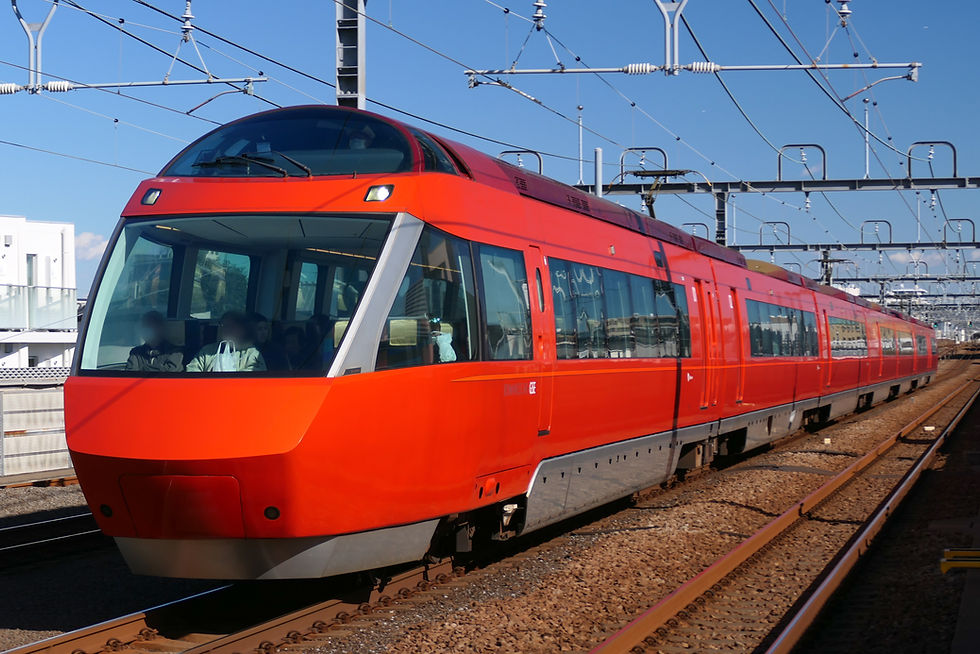
An Odakyu 70000 series GSE operating the Romancecar Hakone service to Hakone-Yumoto. Image: MaedaAkihiko / Wikimedia Commons (CC BY-SA 4.0).
Tokyo to Hakone transport comparison
Origin | Destination | Time / transfers | Adult fare | Pass / seats | Luggage / best for | Watch for |
|---|---|---|---|---|---|---|
Shinjuku | Hakone-Yumoto | About 75–95 min; direct | ¥2,411 with IC fare and ticketless surcharge | Freepass covers base fare only; all seats reserved; add ¥1,150 | Comfort, older travelers, controlled arrival; luggage space varies by train | Popular departures sell out; boarding without the ticket adds a fee and does not guarantee a seat |
Shinjuku | Hakone-Yumoto | About 110–130 min; usually change at Odawara | ¥1,261 by IC card | Included in Shinjuku Freepass; no reserved seat | Budget trips with light luggage | Crowding around commuter periods and weekends |
Tokyo | Odawara | About 75–90 min; direct Tokaido Line train | About ¥1,595 by IC card | JR coverage depends on pass; ordinary seats not guaranteed | Tokyo, Ginza and Ueno bases; Green Car option | Hakone transport begins after the Odawara transfer |
Tokyo / Shinagawa | Odawara | Tokyo about 33 min; Shinagawa 25–28 min; direct | Tokyo ¥3,280; Shinagawa ¥3,100, unreserved | Nationwide JR Pass: Hikari/Kodama; JR TOKYO Wide Pass does not cover it | Time-sensitive trips, luggage, onward Kansai travel | Nozomi does not stop at Odawara; check Kodama or selected Hikari services |
Central Tokyo | Selected sights / hotel | Usually 2–3+ hr; traffic-sensitive | Varies by product or vehicle | No Freepass; reservation required | Groups, limited mobility, wheelchairs, several bags or hotel door service | Verify the exact departure point, inclusions and return; a Fuji–Hakone tour is not a Hakone transport pass |
Times vary by departure, connection, road traffic and weather. Rail fares were checked against current information available on July 30, 2026.
Shinjuku to Hakone: Romancecar or regular Odakyu
The Romancecar is a convenience upgrade, not a half-price shortcut. It runs through to Hakone-Yumoto with reserved seating, which is valuable when you have a ryokan dinner check-in, an older companion or a suitcase you do not want to drag across platforms at Odawara. Train formations differ, so luggage storage is not identical on every departure and large bags should not be assumed to fit beside the seat.
Regular Odakyu services use the same base fare without the limited-express supplement. Most practical itineraries change at Odawara and take roughly 30–60 minutes longer. Two adults can save ¥4,600 on a round trip by skipping the Romancecar, a meaningful difference for a relaxed Yumoto-only stay. The trade-off is unreserved seating and possible crowding through the Tokyo commuter section.

Hakone-Yumoto is the Romancecar terminus and a key transfer point for Gora, Sengokuhara and Lake Ashi.
Tokyo Station or Shinagawa to Hakone: JR or Shinkansen
From Tokyo Station, Ginza, Nihombashi, Ueno or Shinagawa, crossing the city to Shinjuku can erase much of the Romancecar advantage. A conventional JR Tokaido Line train reaches Odawara directly at a lower fare. The Tokaido Shinkansen cuts Tokyo–Odawara to about 33 minutes and Shinagawa–Odawara to roughly 25–28 minutes. From Odawara, allow another transfer: about 15 minutes by Odakyu/Hakone Tozan service to Hakone-Yumoto, or a bus toward Lake Ashi or Sengokuhara.
The nationwide Japan Rail Pass can cover Hikari or Kodama trains that stop at Odawara, subject to the pass rules. Nozomi does not stop at Odawara. The JR TOKYO Wide Pass does not cover the Tokaido Shinkansen because that line is operated by JR Central. Even when your JR segment is covered, Hakone's mountain railway, ropeway, cruise and most local buses still require separate tickets or a Hakone Freepass.
Your Hakone destination changes the best route
For Hakone-Yumoto, the Romancecar is direct; regular Odakyu, JR and Shinkansen routes connect at Odawara. A ryokan-only stay in Yumoto rarely needs the Freepass. For Gora, continue on the Hakone Tozan Railway for the Open-Air Museum, Gora Park, cable car and Sounzan. For Lake Ashi, use a direct bus from Yumoto or Odawara to Moto-Hakone/Hakone-machi, or travel through Gora, Owakudani and Togendai. Sengokuhara is primarily bus territory rather than a stop on the rail–ropeway–cruise line, so road congestion matters more.
The classic loop runs Hakone-Yumoto–Gora–Sounzan–Owakudani–Togendai–Lake Ashi cruise–Moto-Hakone or Hakone-machi–bus back to Yumoto. The reverse direction is valid, but accommodation, weather and last-service times should decide the order.

Gora Station connects the mountain railway with the cable car. Image: 663highland / Wikimedia Commons (CC BY-SA 4.0).
What the Hakone Freepass includes—and what it does not
The current pass is sold for two or three consecutive calendar days. From Shinjuku, the adult price is ¥7,100 for two days and ¥7,500 for three. From Odawara, it is ¥6,000 and ¥6,400. The Shinjuku version includes one round trip between the departure station and Odawara; the Odawara version covers the Hakone area only. Within the valid zone, both cover the Hakone Tozan Railway, cable car, Hakone Ropeway, Hakone Sightseeing Cruise and designated sections of Hakone Tozan buses, the sightseeing facilities bus, Odakyu Highway Bus and Tokai Bus.
It does not include the Romancecar limited-express ticket, Izu-Hakone Bus, travel outside the zone, the pirate-ship special cabin or the Ashinoko Liner reserved-seat surcharge. Two days means two calendar days, not 48 hours from activation. Digital group tickets also have device and together-travel restrictions, so independent sightseeing by members of one group can be a problem.
Is the Hakone Freepass worth it? Route-by-route math
Case 1—Shinjuku return trip and full loop: regular Odakyu return base fares cost ¥2,522. Add a one-way ropeway fare of ¥2,000 and a long one-way sightseeing-cruise fare of ¥1,700, and the running total is already ¥6,222. That is only ¥878 below the ¥7,100 two-day Shinjuku pass before adding the Yumoto–Gora mountain train, the cable car and the return bus. A full loop therefore normally pushes the pay-as-you-go total above the pass.
Case 2—Hakone-Yumoto ryokan only: the ordinary Odakyu round trip is ¥2,522, far below ¥7,100. Adding the Romancecar does not rescue the pass calculation because its ¥2,300 round-trip supplement is payable with or without the Freepass. For a station-area walk, onsen and one hotel, separate tickets are the rational choice.
Case 3—enter at Odawara and complete the loop: the ropeway and long cruise already total ¥3,700. The two-day Odawara pass is ¥6,000, leaving ¥2,300 to cover the Odawara/Yumoto–Gora rail segment, cable car and buses. A genuine loop or two days of repeated bus use will often recover that difference; a hotel shuttle and simple return may not.
Case 4—three slow days: the three-day pass costs only ¥400 more than the two-day version. One meaningful bus, train or cruise segment on day three can justify the upgrade. If day three is only breakfast followed by a direct departure through Odawara, two days may be enough.
Who should buy it—and who should not
It is usually a good buy for first-time visitors completing the loop; travelers staying in Gora or by Lake Ashi with several transfers; two- or three-day itineraries covering Owakudani, Togendai, Moto-Hakone and Sengokuhara; and anyone who values one ticket when services require an official substitute bus.
It is usually poor value for a Hakone-Yumoto-only ryokan stay; a hotel shuttle from Odawara followed by the same return; itineraries dominated by non-covered Izu-Hakone buses; open-jaw trips leaving through Mishima or Gotemba after buying a pass that includes an unused Odakyu return; or wet-weather plans reduced to one or two short rides.
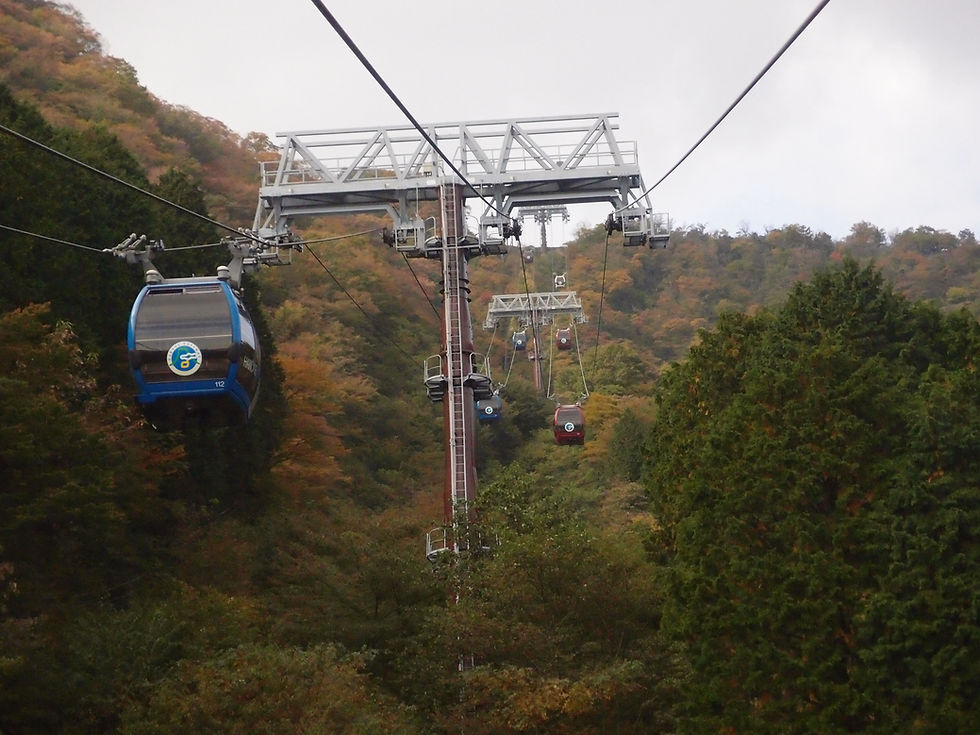
The Sounzan–Owakudani section of the Hakone Ropeway, not the separate Komagatake Ropeway. Image: Guilhem Vellut / Wikimedia Commons (CC BY 2.0).
One day, two days or three days
One day: there is no one-day Hakone Freepass, but the two-day pass can still pay when you use the cruise, ropeway, mountain transport and buses. Do not force a loop merely to recover the fare when daylight is short or heavy rain is forecast. Two days and one night: this is the natural use case, splitting the arrival, ryokan and lake or Sengokuhara sections. Three days and two nights: the ¥400 extension lets you separate museums, the lake and Owakudani without racing the last departures.
Ryokan-only visitors should put the hotel shuttle, dinner check-in deadline and post-checkout route ahead of the pass. A Yumoto property, an Odawara pickup or two days without the loop makes the regional transport pass secondary.
Large luggage, children and older travelers
Hakone-Yumoto's official luggage service currently accepts bags from 8:30 a.m. to noon for delivery to participating accommodation after 3 p.m. A standard item—up to 140 cm total dimensions and 15 kg—costs ¥1,500 one way; a large item up to 200 cm and 30 kg costs ¥2,500. For the return, hotels generally require bags by 10 a.m., with collection at the station from 1:30 to 6:30 p.m. Participating properties only apply, and strollers, computers, valuables and fragile items are among the exclusions.
Child Freepass prices are heavily discounted: Shinjuku costs ¥1,600 for two days or ¥1,850 for three; Odawara costs ¥1,500 or ¥1,750, for ages 6–11. Child Romancecar supplements are generally half the adult amount. A child under six using a separate seat may still need the relevant child base and limited-express tickets. There is no universal Hakone senior fare, so reserved seating, slopes, elevators and the risk of standing on buses can matter more than the nominal cheapest option.
Suspensions, rain and refund planning
The ropeway can stop for strong wind, lightning or typhoons, while Lake Ashi cruise services may be cancelled in poor conditions. The official transport status page showed the main modes operating normally when checked on July 30, 2026, but same-day status is what matters. Scheduled work has already been announced: Owakudani–Sounzan is due to close December 7–24, 2026; Togendai–Ubako–Owakudani is due to close January 12–February 26, 2027. Substitute buses are planned about every 15 minutes and accept the Hakone Freepass.
One suspended mode does not automatically trigger a proportional pass refund. Paper and digital tickets have different channels, usage conditions and fees. An entirely unused pass should be handled through the official seller or Odakyu counter under the current terms. Once travel has started, use the official replacement route, shift to Gora museums, Yumoto onsen or Sengokuhara, and do not assume a full refund.
Check the official Hakone transport operating status on the day you travel, and keep a bus alternative and earlier descent in reserve.
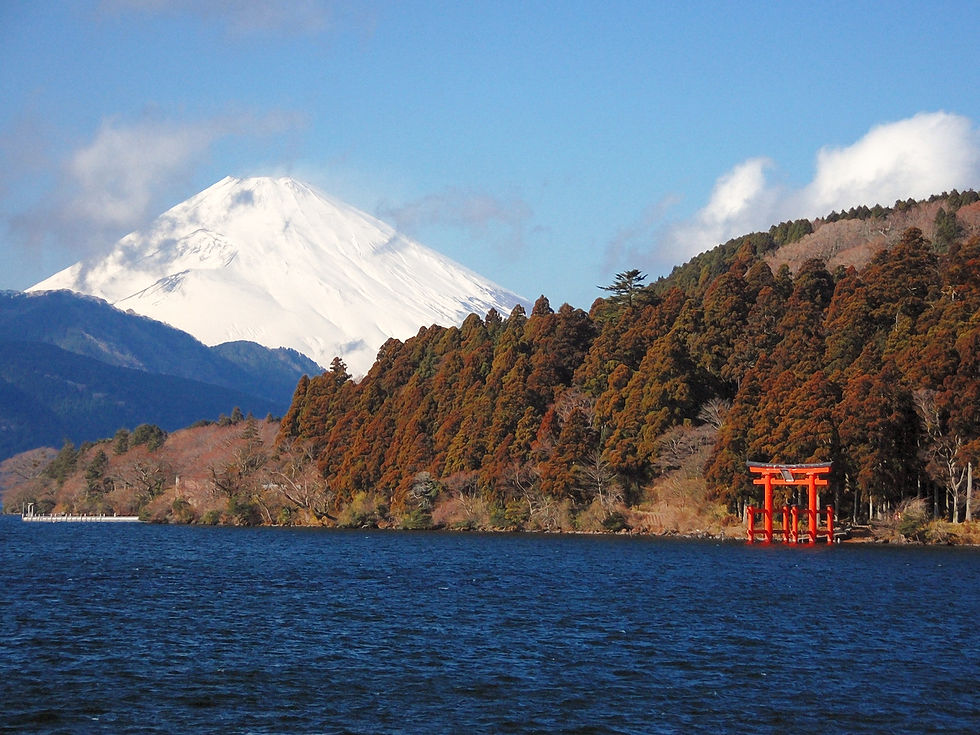
Cruise schedules and visibility on Lake Ashi are weather-dependent, so the loop needs a workable fallback. Image: Wikimedia Commons.
Final decision flow
First, use Odakyu from a Shinjuku base and compare JR from a Tokyo/Shinagawa base. Second, treat a Yumoto ryokan as a comfort-and-transfer decision rather than an automatic Freepass purchase; calculate local movement for Gora, Lake Ashi and Sengokuhara. Third, a ropeway, cruise and at least two additional mountain-train or bus segments normally favor the pass. Fourth, buy the Romancecar limited-express ticket separately when you want a reserved seat. Fifth, recheck suspensions, roads and final departures on the travel day.
Pair this with
Search Hakone accommodation
Accommodation location changes the transport equation: Yumoto suits late arrivals and early departures, Gora starts the mountain loop higher, and Lake Ashi preserves the quiet evening and morning shoreline.
FAQ
What is the fastest way from Tokyo to Hakone?
The Tokaido Shinkansen from Tokyo or Shinagawa to Odawara is fastest, followed by a local transfer into Hakone. From Shinjuku, the direct Romancecar is often simpler than crossing Tokyo to reach the Shinkansen.
Does the Hakone Freepass include the Romancecar?
No. The Shinjuku version covers the ordinary Odakyu base fare, but the all-reserved Romancecar requires a separate limited-express ticket.
Is the Hakone Freepass worth it for one day?
It often is for a full ropeway–cruise–mountain-transport loop, but not necessarily for Yumoto only, a single Lake Ashi stop or a rain-shortened itinerary. There is no one-day version, so compare the two-day price with the actual rides you will take.
Can I use a JR Pass to reach Hakone?
The nationwide Japan Rail Pass can cover eligible Hikari or Kodama services stopping at Odawara. The JR TOKYO Wide Pass does not cover the Tokaido Shinkansen. No JR Pass automatically covers Hakone's ropeway, cruise or most local buses.
Do I change at Hakone-Yumoto for Gora?
Normally, yes. Continue from Hakone-Yumoto on the Hakone Tozan Railway to Gora. Some bus routings exist, but the mountain train is the easiest first-time route to understand.
Can I still use the Freepass when the ropeway is closed?
Yes, on the other covered modes and on designated substitute buses during official maintenance. A temporary closure does not automatically mean a full refund; check the unused-versus-started rules for your purchase channel.
Is the Romancecar or Shinkansen better with large luggage?
Both offer more control than a crowded commuter train, but the specific train, seat and luggage rules still matter. At Hakone-Yumoto, use the participating-hotel luggage service before noon or store the bag at Odawara/Yumoto before entering the mountain network.
Fare and operating-status check: July 30, 2026. Primary references were Odakyu, Hakone Navi, JR East, JR Central and official transport operators. Recheck fares, timetables and suspensions immediately before travel.
Comments