
Ueda or Bessho Onsen: Where Should You Stay for Two Nights?
- Iris

- 4 days ago
- 4 min read
Ueda or Bessho Onsen: where should you stay for two nights? The Shinkansen doors open at Ueda and the next decision comes almost immediately: leave the suitcase near the mainline station, or carry it onto the local Bessho Line for another 40 minutes. Both choices work without a car. They simply produce very different evenings.
Ueda is the flexible base. It keeps onward trains, city restaurants and luggage handling easy. Bessho Onsen is the experience-led base: ryokan dinner, public baths and a quieter onsen street after day-trippers have gone. For a two-night stay, the best answer depends less on the ¥590 fare than on whether the onsen evening itself is one of the reasons you came.
Ueda or Bessho Onsen is really a choice between transport flexibility and an onsen evening
The official Ueda tourism site currently lists Bessho Onsen as about 40 minutes from Ueda on the Ueda Dentetsu Bessho Line, with an adult one-way fare of ¥590. That is short enough for a day trip. Staying overnight becomes worthwhile when you want the hours after dinner and before breakfast, rather than simply another sightseeing stop.
Base in Ueda when the next morning matters more than tonight
Ueda works especially well for a late arrival from Tokyo, a large suitcase, or an onward trip to Nagano or Karuizawa. Tokyo to Ueda is roughly a 90-minute Shinkansen journey, so keeping the hotel near the main station avoids adding a local-line transfer to the end of a travel day.
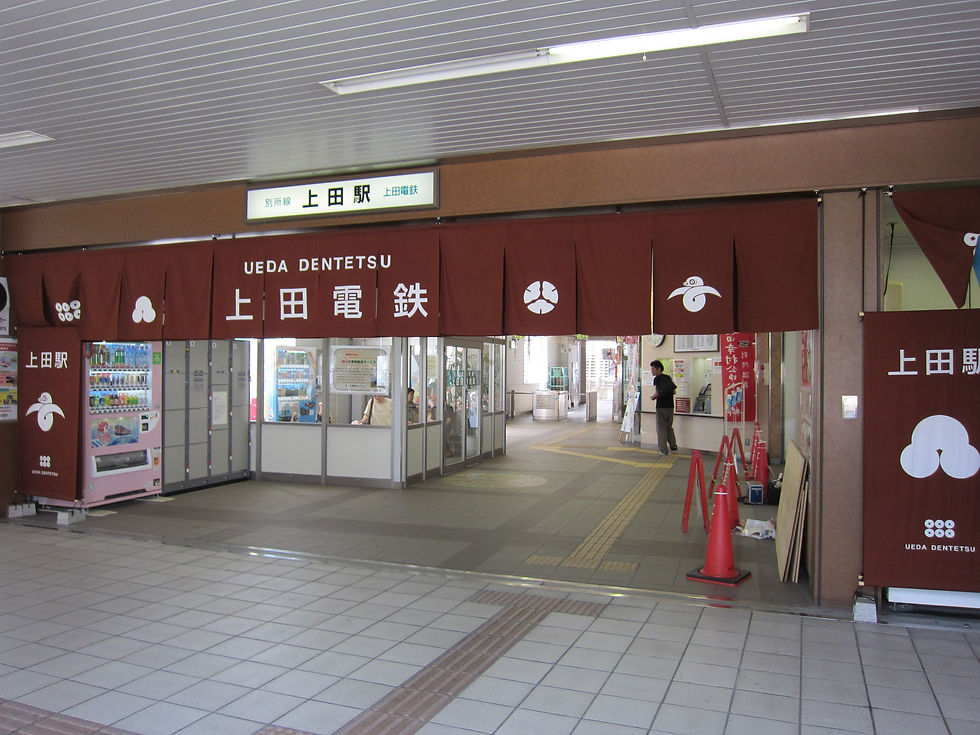
Ueda Electric Railway station entrance. Photo: アルトクール / Wikimedia Commons, CC BY-SA 4.0.
The trade-off is atmosphere. A Ueda base lets you visit Bessho Onsen, bathe and return before the evening gets late, but it turns the onsen town into a day trip. Travellers deciding whether ryokan dinner, private baths and an onsen evening are worth prioritising should compare those features before choosing the base. Travellers who care more about Ueda Castle, Yanagimachi, easy restaurants and a clean departure the next morning will usually accept that compromise.
Bessho becomes worth the hotel change after the daytime visitors leave
Bessho-Onsen Station is unstaffed but has a ticket machine, toilet and an accessible path to the platform. The town beyond it is compact enough that temples, public baths, footbaths and ryokan sit within one small area rather than requiring another bus journey.

Entrance to Bessho Onsen. Photo: Abasaa / Wikimedia Commons, Public Domain.
One night here makes sense when dinner at the ryokan, an evening bath and a slow morning are part of the trip. Arriving late, eating quickly and leaving first thing the next day gives you the transport cost of staying in Bessho without much of the reason to do it.
The public baths are what turn an overnight stay into a different experience
Bessho Onsen currently has three public bathhouses charging ¥300 for adults. Ishiyu is open 6:30–21:30 and normally closes Tuesdays; Daishiyu runs 6:00–21:00 and normally closes Thursdays; Oyu runs 6:30–21:30 and normally closes Wednesdays. Holiday periods can change those weekly closures, so check the current monthly notice before travel.
A day visitor can use the same baths. The advantage of sleeping in town is timing: dinner does not have to be squeezed around a return train, and an early-morning walk or bath is still available before you move on.
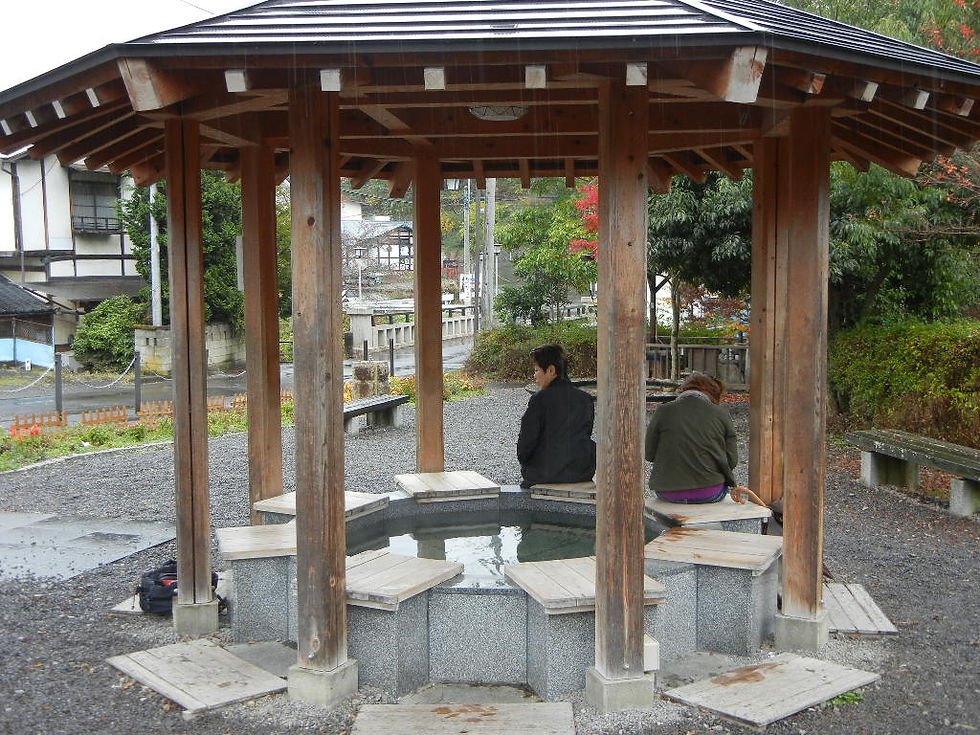
Nanakuri foot bath, Bessho Onsen. Photo: NY066 / Wikimedia Commons, CC BY-SA 3.0.
Pair this with
For two nights, changing hotels only pays off when the ryokan evening is the point
Two nights in Ueda: the lowest-friction option for large luggage, city sightseeing and onward rail travel. You can still spend most of one day in Bessho Onsen.
One night Ueda, one night Bessho: the strongest split when you arrive late on Day 1, explore Ueda the next morning and move to the onsen with a light bag in the afternoon. This sequence gives each base a clear job.
Two nights in Bessho: best for travellers deliberately slowing down around baths, temples and the ryokan. It is less efficient if both days require repeated trips back toward central Ueda.
Luggage changes the equation more than the ¥590 fare
The Bessho Line itself is straightforward, but the final walk through an onsen district matters when it rains, freezes or when you are carrying a full-size suitcase. Ueda Station is staffed and has accessible station facilities. Bessho-Onsen Station has an accessible route to the platform, but your ryokan may still sit uphill from the station. A property shuttle can therefore be more valuable than shaving a few minutes off the rail journey.
A late arrival usually pushes the answer toward Ueda
The Bessho Line timetable was revised on March 14, 2026 and still includes evening trains, but frequencies are naturally thinner than a Tokyo commuter line. A delayed Shinkansen plus a fixed ryokan dinner time can turn a simple transfer into pressure. For arrivals around 18:00 or later, staying near Ueda Station and entering Bessho after breakfast is usually the calmer plan.
Ueda gives you a platform, a timetable and an easy next morning. Bessho gives you the sound of a small hot-spring town after the last daytime visitors drift away. For two nights, there is no need to move hotels just to say you stayed in both places; move only when that onsen evening is worth making the journey part of the experience.

Comments