
Where to Stay in Okutama Without a Car: Ome, Mitake Gorge or Okutama Station?
- Iris

- 2 days ago
- 5 min read
Okutama is still Tokyo, but it does not behave like central Tokyo. After the last dense station neighborhood fades, the Ome Line begins to feel like a mountain railway: more river, longer gaps between trains and far fewer places to solve a late dinner or a heavy suitcase. Choosing where to stay in Okutama without a car is therefore less about finding the prettiest room and more about deciding which transfer you want to remove.
For most first-time two-day trips, Ome is the easiest base, Mitake Gorge is the most atmospheric, and Okutama Station is the most efficient only when the next morning begins farther west. Travelers who want one ryokan evening and a relaxed riverside walk should look closely at Mitake. Travelers carrying large luggage, arriving after dark or needing more dinner options usually gain more from Ome.
Where to stay in Okutama without a car: start with luggage and the next morning
Ome Station keeps the trip closest to ordinary city logic. Trains are more frequent than in the western section, the station area has a larger pool of restaurants and shops, and the next day's journey can still continue toward Mitake or Okutama. It is the strongest choice for late arrivals, families, travelers with two suitcases and anyone who wants to separate hotel comfort from the day's mountain transport.
Mitake Gorge is the middle option. A riverside stay removes the evening return to Ome and protects the quiet hours after day trippers leave. The trade-off is fewer dinner choices and a greater need to respect check-in and meal times. The area works best when the ryokan is part of the trip rather than simply a bed beside the railway.
Okutama Station places the hotel closest to the western bus network. It makes sense when the next day targets Lake Okutama, Nippara or another early bus. For a trip centered on Mitake Gorge, however, it can create unnecessary backtracking. The town also has fewer late-evening options than Ome, so a missed dinner window is harder to fix.

Ome is the safer base when the trip begins with a suitcase
A 24- or 28-inch suitcase changes the value of every local transfer. Staying in Ome lets you arrive from central Tokyo, store or drop the bag and ride west with only a day pack. The next morning, you can choose Mitake, Okutama or a rainy-day city plan without first returning from a small riverside stop.
Ome also gives the widest recovery margin. If the mountain weather turns, a bus is delayed or an activity ends earlier than expected, the hotel remains on the main railway before the least frequent section. That is a practical advantage rather than a scenic one, but on a short trip it protects more usable time.
The limitation is atmosphere. Returning to Ome means leaving the river and mountain setting before dinner. Travelers who want the accommodation itself to continue the Okutama experience may find the convenience emotionally flat.
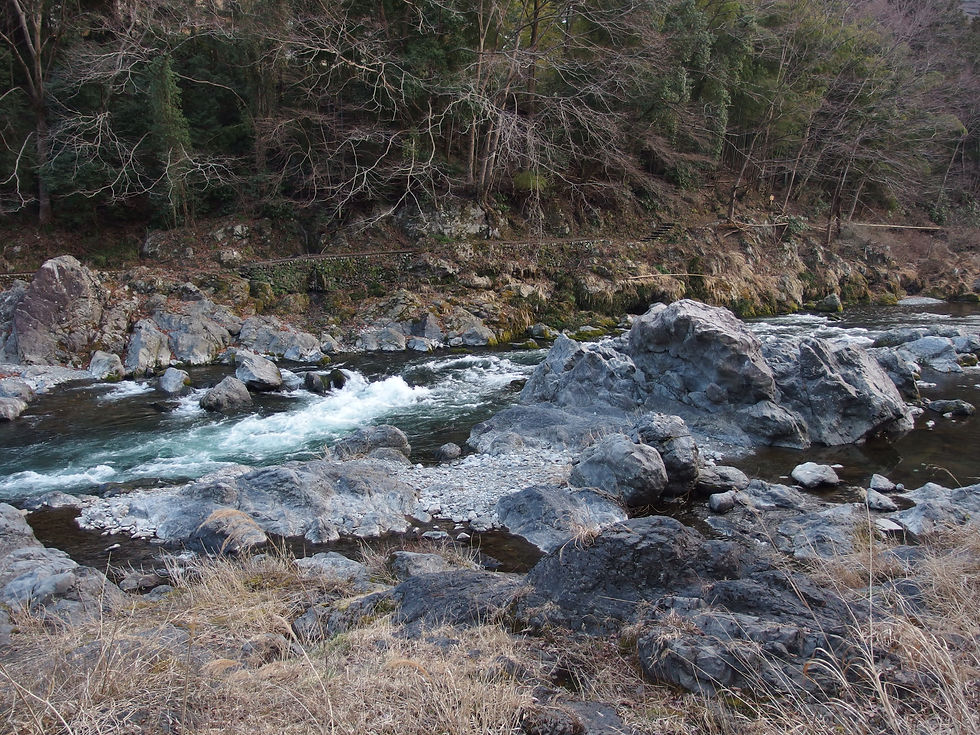
Mitake Gorge is worth the extra planning when the ryokan evening matters
Mitake works best when check-in, dinner and the river are part of one continuous evening. A ryokan can turn a simple day trip into a slower stay: walk after the afternoon crowd, return for dinner and start the next morning beside the water. That value disappears if you arrive after the meal deadline or spend the evening commuting back from another area.
Confirm whether the property provides dinner, whether meals require advance booking and how far it is from the station with luggage. A map may show a short distance while hiding stairs, slopes or a bridge approach. The best Mitake stay is not automatically the property with the closest pin; it is the one whose arrival process matches your train and bags.
Mitake is less useful for travelers whose second day begins at Lake Okutama or on an early western bus. In that case, the atmospheric night can create a morning transfer before the real itinerary starts.

Tokyo Okutama Onsen Okutamaji
A riverside onsen stay near the Ome–Mitake section for travelers who want dinner, a public bath and a quieter night to remain part of the Okutama experience. It works best when you arrive before the meal deadline and do not need the earliest western bus the next morning.



Official hotel press images: Hospitality Operations Co., Ltd. / PR TIMES.
Related reading
Okutama Station is the right answer only when the next day points farther west
Staying by Okutama Station removes the first train from a western-bus morning. That is useful for Lake Okutama, Nippara and other routes that depend on limited departures. It can also help hikers who need a clearly defined first bus rather than a leisurely ryokan breakfast.
The trade-off appears at night. Restaurant choice is limited and closing times matter. A hotel or guesthouse without dinner requires a more deliberate food plan than an Ome stay. Arriving late can also mean reaching the room after the useful part of the evening has already disappeared.
Use this base when the saved morning transfer has real value. Do not choose it simply because the name “Okutama” looks like the most authentic location on the booking map.
One or two nights: the cleanest patterns
For one night with a Mitake Gorge walk and an easy return to Tokyo, stay in Ome or Mitake. Choose Ome when luggage and dinner flexibility dominate; choose Mitake when the ryokan evening is a central experience. For one night before an early Lake Okutama or Nippara bus, stay near Okutama Station.
For two nights, avoid moving hotels unless the second base solves a different morning. Two nights in Ome can support one Mitake day and one Okutama day with the least packing. Ome followed by Okutama can make sense when the final morning starts on a western bus. Splitting Ome and Mitake simply to stay in both usually creates more luggage handling than travel value.
A rainy forecast strengthens Ome because it protects transport and alternative plans. A clear forecast and a meal-inclusive ryokan strengthen Mitake. A fixed early bus strengthens Okutama Station. The correct base is the one that removes the hardest movement, not the one farthest from Shinjuku.
The final choice
Choose Ome for the widest transport margin, easier meals and large luggage. Choose Mitake for a river-and-ryokan evening that continues after the day trip ends. Choose Okutama Station for a specific early western-bus plan. In car-free Okutama, moving five stations closer to the mountains can save less time than choosing the hotel that prevents one badly timed transfer.
Before booking, confirm dinner deadlines, station-to-property walking conditions, luggage storage and the first useful train or bus on the next morning. Those four details decide more than the room view.


Comments