
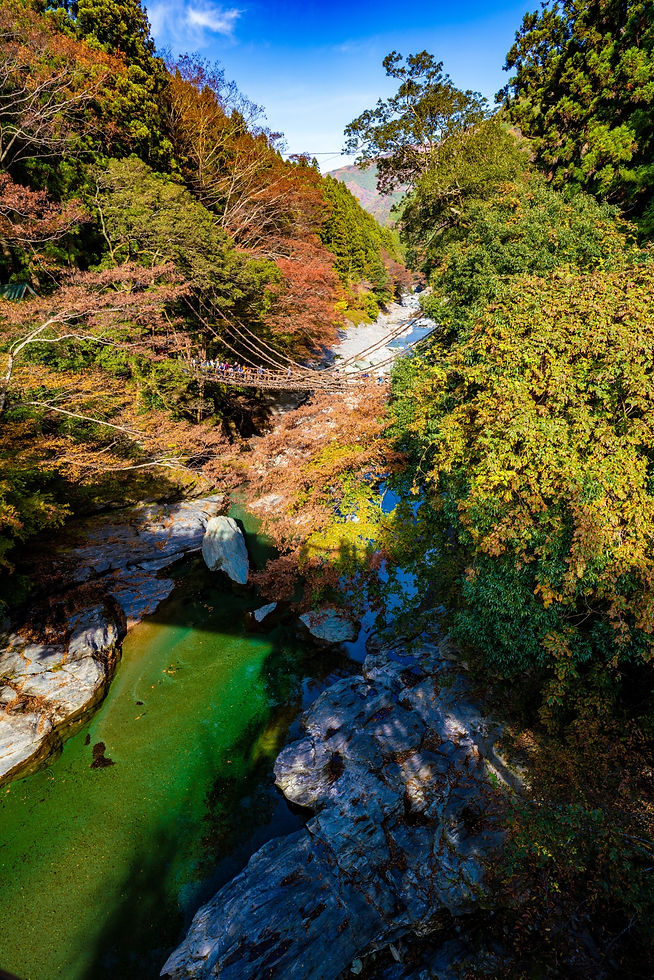
Iya Valley Autumn Leaves Guide: Driving, Buses, Vine Bridges, Onsen and Hotels
- cody
- 4 days ago
- 5 min read
Updated: 2 days ago
Iya Valley isn’t just one vine bridge you reach on a simple day trip. Oboke, the main Iya bridge, central Iya and Oku-Iya sit on different roads, transport and elevation. First-time visitors should give one day to Oboke plus the main bridge. Only add the Peeing Boy viewpoint, Hinoji bend, Ochiai village or the Oku-Iya double bridges with an overnight stay and a separate second day.
Last checked on August 4, 2026. The main vine bridge currently opens 8am–5pm from September through March, charges JPY550 for adults and JPY350 for elementary-school children, and can close in severe weather. Night illumination generally runs 7–9:30pm, but you can’t cross the bridge during that window. The main car park is first come, first served, about five minutes away, and normally JPY500 for a standard car. Recheck buses, boat, roads and hotel shuttles for your exact travel date.
Four zones with different transport difficulty
Oboke is the rail gateway and the lowest-risk zone. It suits car-free travelers, the gorge boat, lunch, river scenery and a station-side or gorge hotel. The main Iya bridge is the first-visit centrepiece, with Biwa Waterfall, parking and limited food nearby. When the dated bus or taxi connection actually works, the two make for a realistic single day.
Central Iya covers the Peeing Boy statue, Hinoji bend, Iya Onsen and Ochiai village. The stops aren’t connected by any convenient walking trail. Roads are narrow, bends are blind and safe parking is scarce. A navigation app might pick a shorter but far more difficult local road. This zone works best for an experienced mountain driver, a charter, or a traveler staying locally and taking it slow.
Oku-Iya and the double vine bridges are farther out, with much thinner public transport and heavier dependence on daylight, weather and road conditions. Don’t treat them as an optional late-afternoon add-on after the main bridge — make them the whole point of a second day, and cancel immediately if frost, fog, rockfall, seasonal closure or a difficult return makes the route unsafe.

A realistic one-day core: Oboke plus the main bridge
Use roughly 8:30–10:30am for the Oboke gorge or the boat. River conditions and weather decide whether the boat stays in the plan — if it’s cancelled, fall back on viewpoints, a museum or a longer lunch rather than scrapping the valley altogether. Car-free travelers need to coordinate the arriving train with the local bus. Drivers should budget for parking, retrieval and slower mountain-road speeds instead of trusting a flat-road time estimate.
Use 10:30am–noon for transfer and lunch. Remote restaurants may close in the afternoon or sell out, so eat in Oboke, at a roadside station or at the hotel rather than pushing lunch to 3pm. Use noon–2:30pm for the bridge, Biwa Waterfall and nearby walking. The crossing itself is short, but parking, ticketing, queues, the swaying bridge and slippery steps all take time.
After 2:30pm, head back to the hotel, Oboke or Awa-Ikeda instead of squeezing in Oku-Iya. Protect the final bus, ryokan dinner, final check-in and remaining daylight. Night illumination is only worth doing once your accommodation and return are already sorted — and remember, it’s a viewing event, not another bridge crossing.

Two days: choose central Iya or Oku-Iya
The central-Iya version covers Oboke and the main bridge on Day 1, then picks two or three of Iya Onsen, the Peeing Boy viewpoint, Hinoji bend and Ochiai for Day 2. It suits photography, onsen and travelers who’d rather avoid night driving. The roads don’t offer safe spontaneous stops at every viewpoint, which is why a local charter adds real safety, not just convenience.
The Oku-Iya version keeps the same first day, then heads out early on Day 2 for the double bridges and deeper valley. Confirm opening hours, roads, weather, fuel and the return before leaving the hotel. If you’re prone to motion sickness, uncomfortable with heights, or can’t sit through long mountain transfers, stick to central Iya or stay near Oboke instead.

Public transport, charter or rental car
The car-free core relies on JR Oboke followed by a local bus to the bridge corridor. The real weakness here is frequency, not distance. Work backward from the final service and drop the boat or lunch if a connection starts looking shaky. Awa-Ikeda is useful for a late arrival, car pickup, and a wider range of services; Oboke is better for the gorge and the core bridge day. Hotel shuttles need advance confirmation of date, pickup point and meal compatibility.
A charter is pricey but can make sense for three or four travelers who aren’t comfortable driving here. An official six-hour Oku-Iya model route has listed about JPY29,400 per vehicle, but get a current quote and confirm language support, pickup, parking, overtime and exclusions. Self-driving only makes sense for drivers comfortable with narrow roads, blind bends, limited shoulders and long stretches with no easy turnaround. Factor fuel, parking, insurance, NOC and one-way fees into the real cost.
Foliage timing, clothing, accessibility and luggage
Higher Oku-Iya usually changes colour before the main bridge and lower Oboke. Check the higher areas in late October and early November, and mid-November for the broadest balance — but treat these as historical planning ranges, not a 2026 forecast. Rain, wind, frost and rockfall warnings matter more than colour does. The bridge sways as you walk, and waterfall steps and gorge viewpoints get slippery after rain.
Older travelers should focus on the Oboke boat, the main bridge area and an onsen, dropping the central-Iya roadside viewpoints if motion sickness or walking becomes a concern. Forward the main suitcase to the next city and carry one overnight bag, after confirming the ryokan accepts delivery. Check dinner cutoff, final check-in, stairs, bath access, shuttle language and cancellation terms before you arrive.

Hotel bases and recovery plan
Primary examples are Hotel Iya Onsen, Iya Bijin and Hotel Kazurabashi, with Hotel Obokekyo Mannaka and 4S Stay Awaikeda as backups. Oboke suits car-free access and the boat; an Iya onsen stay is good for dinner, dawn light and avoiding dark roads; Awa-Ikeda works for a late arrival or next-day car pickup. These are location examples, not live availability or fixed-rate claims.
If the bridge or a deeper road closes, stay around Oboke, Awa-Ikeda or an accessible onsen. If upper Iya is past peak, descend rather than driving farther in. If colour’s running late, only head into Oku-Iya with a confirmed road and return plan. The boat, bridge and viewpoints are independent of each other — losing one doesn’t make the overnight stay worthless.


