
Katakai Festival 2026: What You Gain by Arriving at 1 PM Before the Night Fireworks
- Iris

- 14 hours ago
- 4 min read
Katakai Festival 2026 creates a very specific planning choice on Saturday, September 12. The famous night fireworks run from 7:30 PM to 10:20 PM and the four-shaku shell is scheduled for 10 PM, just as it is on the first night. What makes day two different is the separate 1–2 PM daytime fireworks session, with daytime starmines and rapid-fire sequences. Arriving at 1 PM therefore does not simply mean “getting there early”; it turns the festival into an all-day endurance plan.
For a fireworks enthusiast, that extra session is a real reason to start early. For a first-time visitor whose non-negotiable moment is the giant four-shaku shell, an evening-focused visit can be the smarter use of energy. Both approaches still lead to the same signature 10 PM moment. The difference is what you want to experience during the six-and-a-half hours before the night program begins.
The 30-second decision: are you coming for daytime fireworks or the four-shaku shell?
Arrive before 1 PM if the day-two-only daytime fireworks are part of the reason you are traveling to Katakai. Focus on the evening if the 7:30 PM night program and 10 PM four-shaku shell are what you actually care about. Do both only when you are comfortable treating September 12 as a long outdoor festival day with deliberate breaks, food, water and battery management rather than a continuous nine-hour viewing session.

A 1 PM start buys you something night-only visitors cannot see
The organiser explicitly lists daytime fireworks from 1 PM to 2 PM on the second day, including daytime starmines and repeated launches. This is not a preview of the evening program. It is a separate way of experiencing large fireworks in daylight, where the blast, smoke trails and physical scale become more important than a black-sky color display. If that contrast interests you, the early start has a clear purpose.
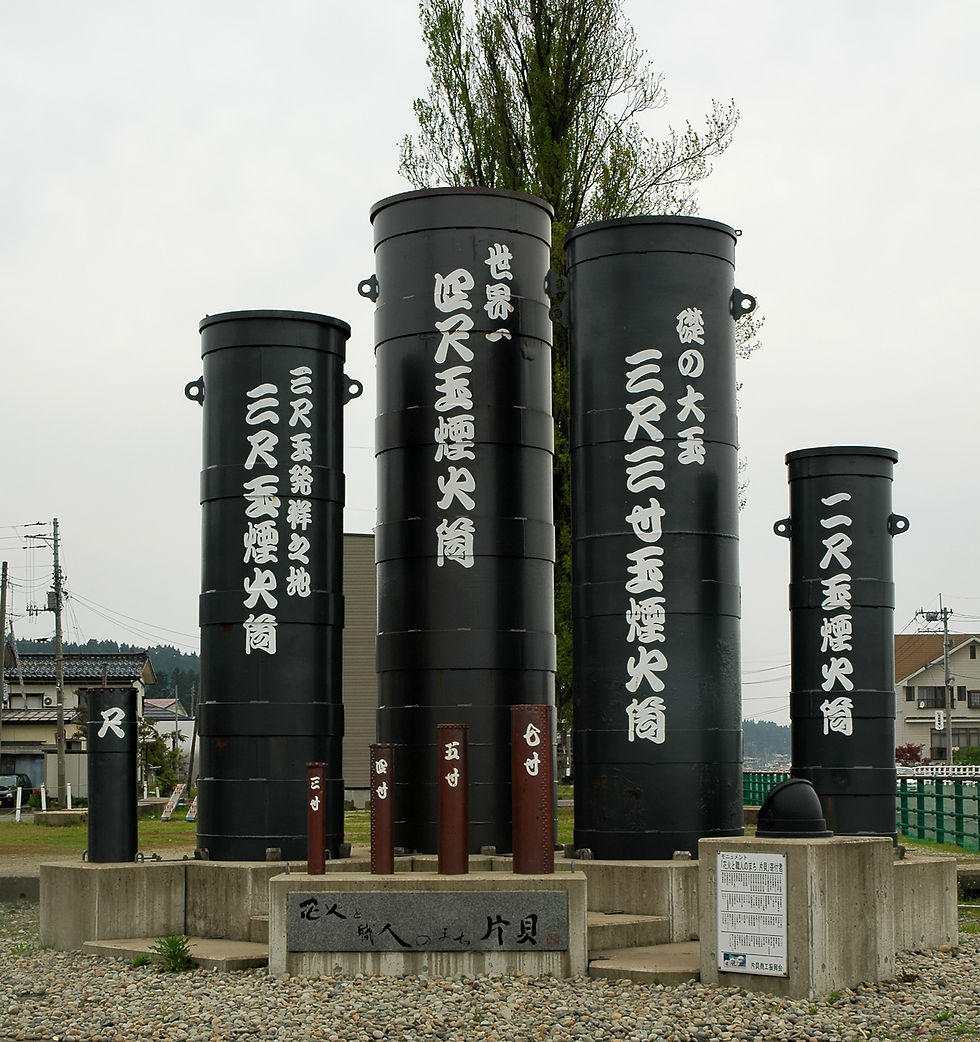
If your mental image of Katakai is the giant shell filling the night sky, however, the daytime hour is optional rather than essential. The 2026 evening display runs 7:30–10:20 PM on both September 11 and 12, and both nights schedule a four-shaku shell at 10 PM. Turning up in the early afternoon does not unlock a different four-shaku finale or automatically produce a better night view.
The real challenge is the five-and-a-half-hour gap before the night program
An all-day Katakai plan succeeds or fails between 2 PM and 7:30 PM. September can still be warm in Niigata, and the combination of walking, queuing, eating, finding toilets and then watching almost three hours of night fireworks can drain the energy you wanted to save for 10 PM. A recent 2025 visitor diary shows a much more sustainable rhythm: afternoon food and rest, then entering the evening viewing period around 7 PM rather than treating every hour as active festival time.
If you choose the 1 PM version, plan the middle of the day as recovery time. Bring water, a simple meal, power and a way to sit or rest where permitted. The official site lists toilets around designated parking areas, the shrine precinct, approach and reserved-seat area, plus roughly 110 festival stalls around the shrine and approach. Those facilities help, but they do not make late-afternoon queues disappear as more people arrive.
A night-only visit still includes Katakai’s defining 10 PM moment
The night-only plan has one major advantage: it concentrates your energy into the 7:30–10:20 PM display. Both nights include the 10 PM four-shaku shell, with a different named pattern on each date. The extra value of an early start on September 12 is therefore the daytime session, not privileged access to the headline shell.
This matters for older travelers, anyone who struggles with long periods on their feet, and visitors who know that heat or crowds reduce their stamina. It is better to begin later and still genuinely want to stay for 10 PM than to arrive at lunchtime and find yourself thinking about leaving at 9:30. Katakai rewards choosing the part of the program you care about most rather than maximizing raw hours on site.

The 10 PM four-shaku shell creates the final trade-off: signature moment or earlier escape
A 2025 local participant described heavy pedestrian and road congestion immediately after the fireworks, with some experienced visitors beginning to leave around 9:30 or 9:45 to get ahead of the main exit. That strategy has an obvious cost: you give up the 10 PM four-shaku shell. For a first trip built around Katakai itself, saving some exit time is rarely a good exchange for missing the display the festival is most famous for.
A better approach is to budget for a slow exit from the beginning. The organiser’s general access information gives roughly 20 minutes by bus from JR Ojiya Station and about 30 minutes from JR Nagaoka Station in normal access conditions. However, the detailed parking, shuttle and special-bus sections currently still carry 2025 labels. Do not copy last year’s final bus or shuttle timings into a 2026 itinerary; recheck the current transport notice shortly before travel.
The final call: start at 1 PM only when the daytime fireworks are part of the goal
The cleanest rule is simple. Arriving before 1 PM on September 12 is a deliberate choice to see the daytime fireworks that do not exist on the first day or in the evening. Arriving later is a deliberate choice to preserve energy for the night display and four-shaku shell. Neither is incomplete. Fireworks enthusiasts are more likely to value the long version; first-time visitors focused on the giant night shells often get a better experience from a shorter, more focused festival window.
Before departure, recheck the 2026 firing status, wind and transport notices. The festival normally launches in rain, while severe wind or warning conditions can trigger postponement. Check the Katakai Fireworks Association’s official 2026 festival information before locking your arrival and return times.
Pair this with
For another Niigata fireworks decision, compare Nagaoka Fireworks 2026 on August 2 or 3 and see how date-specific programs change a one-night plan.
Related guide
To compare what happens after a major finale, read Omagari Fireworks 2026: train, drive or Park & Ride.
More to read
Still comparing festival styles? Use Tokyo Summer Fireworks 2026 to compare different crowd, timing and viewing trade-offs.


Comments