

OMO5 Tokyo Gotanda Review: When Tokyo Goes Quiet Above the Office Lights
- Iris

- 3 days ago
- 7 min read
OMO5 Tokyo Gotanda feels most convincing after 10 p.m. Outside Gotanda Station, trains still pass above the road and office workers disappear into yakiniku restaurants, izakaya and narrow bars. The neighbourhood does not announce itself like Asakusa or Shinjuku. It simply keeps living after the workday ends.
The real transition inside the hotel is not the entrance but the lift. As the floor numbers rise, the street noise drops away. By the time the doors open above the fourteenth floor, the restaurants, railway tracks and office blocks below have turned into a quiet field of Tokyo lights.
The hotel's strongest idea is not to hide you inside luxury. It lets a local Gotanda dinner and a high-rise city view belong to the same night.
OMO5 Tokyo Gotanda review: the 30-second verdict
OMO5 Tokyo Gotanda is worth considering if you want a well-connected Tokyo base with a real neighbourhood dinner scene and a city view when you return. Every guest room is on the fourteenth floor or higher, and room types range from doubles and twins to the six-person OMO House Suite. It suits couples, families and small groups who would rather stay put than move hotels between Tokyo districts. It is less convincing for travellers chasing a huge room at the lowest possible price, a full resort complex or a famous sight immediately outside the door.
Why did Hoshino Resorts choose Gotanda?
Gotanda's value is not one headline attraction but its position and everyday density. The JR Yamanote Line places it between Shinagawa and Shibuya, while the Toei Asakusa Line connects towards Higashi-Ginza, Asakusa and airport routes. Osaki-Hirokoji Station on the Tokyu Ikegami Line is even closer to the hotel. Offices shape the daytime; yakiniku, ramen, izakaya, bars and compact local restaurants shape the evening.
OMO hotels are built around the surrounding town rather than pretending the property is a sealed resort. In Gotanda, the concept amplifies two genuine local strengths: eating and seeing Tokyo from above. That is why the shared space, garden and activities sit roughly sixty metres over the city, while the best dinner story still happens on the streets below.
One evening, step by step: neighbourhood dinner to skyline room
15:00 | Go upstairs first and change the scale of the city
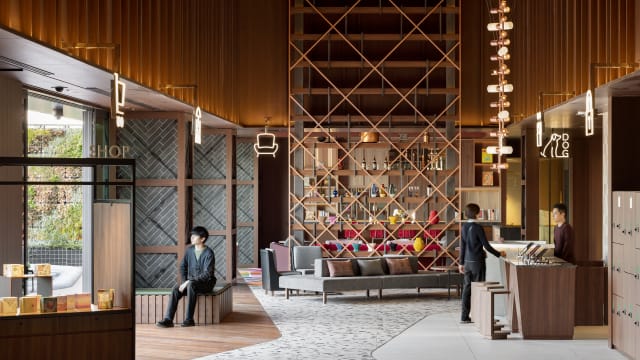
Check-in begins at 3 p.m. Leaving your luggage and walking through OMO Base and the sky garden before chasing another sight makes the design easier to understand. Greenery, water and a wide skyline turn the public floor into a pause above the office district. It is not a resort pool; it is a place to sit down and see where you are in Tokyo.

16:00 | Collect dinner ideas instead of joining the first queue
The hotel uses local food information and selected activities to help guests make sense of Gotanda. Some sessions introduce the neighbourhood's dining styles; other experiences depend on date and availability. Their practical value is not choosing a single 'must-eat' restaurant for everyone. It is understanding distance, hours, food type and queue risk before deciding what fits tonight's energy.
18:00 | Keep dinner at street level
Gotanda works well as an unforced dinner walk. Couples can choose yakiniku or a small local restaurant; solo travellers can find ramen, set meals and counter seating without crossing the city. The useful part comes afterwards: you walk back through a neighbourhood you now recognise, then take the lift away from the noise.
21:00 | When offices go dark, Tokyo becomes part of the room
Returning at night changes the hotel from a transport base into a skyline stay. OMO Chill Night Party runs during designated evening periods, and the shared floor works equally well for a simple drink while the city lights come on. It is not a promise of a major show every night. It is a way to stop adding more sightseeing after dinner.
Which room should you choose? Do not compare only the lowest rate
Twin Room | The balanced choice for two
The twin rooms use floor-to-ceiling windows, a window-side sofa and a compact work surface to bring the city into the room. They suit two people who want separate beds and a short stay. If you have large cases, the room photographs and usable floor area matter more than the phrase 'high-floor room'. All rooms are high, but view direction and layout are not identical.
Deluxe Room | Buy shared space before another bed
The Deluxe Room accommodates up to four and gives families or friends a more complete living zone. At full occupancy, check the actual bed arrangement, extra-bed format, bathroom rhythm and luggage space. The upgrade is most useful when it buys room to live together, not merely one more sleeping place.
OMO House Suite | The room that makes sense for five or six
The OMO House Suite sleeps up to six and includes a kitchen and shared living functions. Its advantage is keeping a family or group together rather than splitting into several rooms. Breakfast preparation, sorting shopping and downtime all become easier. For two guests mainly interested in the skyline, the extra space may not justify the rate.
Breakfast, facilities and family details
Breakfast: Service normally runs from 7:00 to 10:00. The signature choice is an onigiri set with selectable fillings and miso soup; a Western option is also available. Breakfast inclusion depends on the booked plan.

Check-in and check-out: Check-in starts at 3 p.m. and check-out is by 11 a.m. Free guest lockers near the lobby help with early arrival and post-check-out luggage.
Families and groups: The hotel has around 188 rooms with options for one to six guests. Bed-sharing rules for children aged six and under depend on room occupancy, so check the exact family combination before payment.
On-site facilities: Free Wi-Fi, a 24-hour gym, smart laundry facilities and water stations improve longer stays. Selected dog-friendly rooms are also available.
Parking: Parking is available but cannot be reserved and is handled first come, first served. Rail is still the simpler choice for most Tokyo itineraries.
Pair this with
The last six minutes matter more than the map suggests
The hotel is roughly six minutes on foot from Gotanda Station on the JR Yamanote and Toei Asakusa lines, and about one minute from Osaki-Hirokoji Station. Shinagawa is two Yamanote stops away and Shibuya three, making the location useful for Haneda access, southern Tokyo, Yokohama day trips and itineraries that need both Tokyo Station and the western districts.
Six minutes still changes with rain, heat, exits and luggage. The shortest line on a map is not always the easiest route with two large cases. Save the hotel entrance and station exit before arrival rather than circling the block with live navigation.
Who should stay here, and who should look elsewhere?
Best for: travellers who want the Yamanote Line without returning to the busiest parts of Shinjuku or Shibuya every night; couples, families and groups who value dinner choice, skyline views, Shinagawa and airport access, and a hotel that treats the neighbourhood as part of the stay.
Less suitable for: first-time visitors whose entire itinerary sits around eastern Asakusa; travellers seeking a traditional ryokan; anyone needing a large pool, hot-spring complex or all-inclusive resort; and people comparing only the cheapest business-hotel rate without using the public space or local activities.
How should you use one or two nights?
For one night, spend the afternoon around Shinagawa, Meguro or Ebisu, check in, eat in Gotanda and return for the skyline. The next morning, follow the Yamanote Line towards Shibuya and Shinjuku, or use Shinagawa for the shinkansen and Haneda. The point is to stop crossing Tokyo again for dinner.
For two nights, use one day for southern Tokyo or Yokohama and the second for Shibuya, Kichijoji or Tokyo Bay. Keeping the same room is more valuable than moving luggage simply to say you stayed in two districts. The accommodation comparison below helps decide whether Tokyo or Yokohama should hold the extra night.
Recommended stay and booking notes
OMO5 Tokyo Gotanda by Hoshino Resorts
Best for couples, families and small groups who want Yamanote and Shinagawa access, a strong neighbourhood dinner scene and a skyline return at night. It solves the usual trade-off between a purely functional transport base and a less practical view hotel. The main advantages are rooms on the fourteenth floor or above and layouts for one to six guests; the main limitation is the absence of a large resort pool, onsen complex or landmark immediately outside the door.

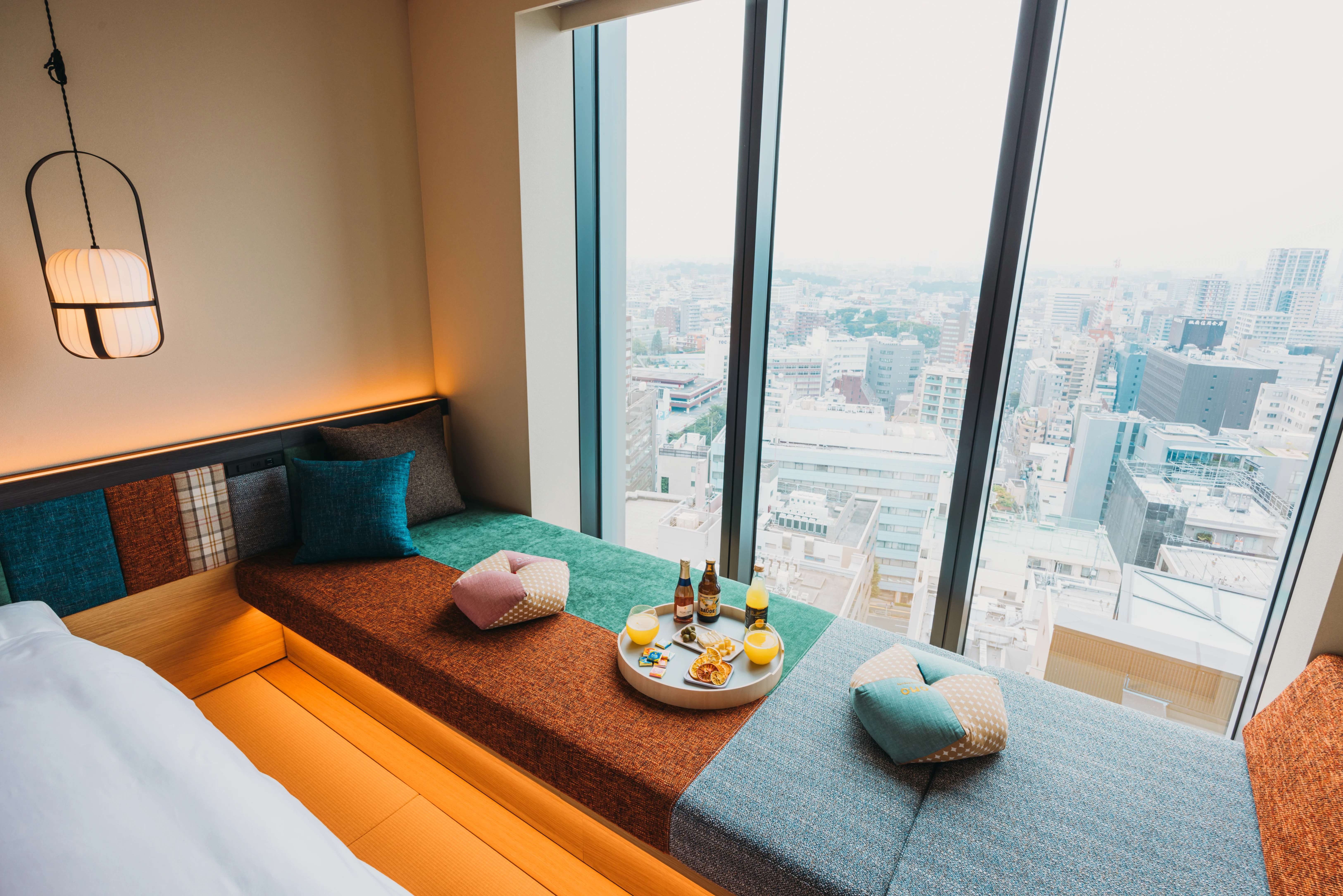


Rooms and sleep: Twin rooms suit two guests; Deluxe Rooms provide more functional shared space for four; the OMO House Suite accommodates up to six with a kitchen. All rooms are on the fourteenth floor or above, but view direction, bedding and usable luggage space vary by room type.
Location and movement: About six minutes from Gotanda Station and one minute from Osaki-Hirokoji, with practical connections to Shinagawa, Haneda, Shibuya and southern Tokyo. Rain, heat, large luggage and the correct station exit can still change the final walk.
Breakfast and facilities: Breakfast generally runs 7:00–10:00 with an onigiri set or Western option; inclusion depends on the plan. Free guest lockers, a 24-hour gym, smart laundry, water stations and selected dog-friendly rooms improve family and multi-night stays.
Watch for: There is no large resort pool or onsen complex. Parking cannot be reserved and is first come, first served. Breakfast, child bed-sharing, occupancy and exact bedding must be checked against the selected rate.
Booking and constraints: Ordinary weekdays can be easier to arrange than a small ryokan stay, but weekends, concerts, cherry-blossom season, summer holidays and major event dates can sell out the useful room types early. Compare the room name, occupancy, breakfast, payment timing and free-cancellation deadline together.
These are accommodation affiliate links. Availability, taxes, breakfast and cancellation terms are confirmed on the final booking page.
Still deciding? Search all Gotanda and southern Tokyo stays
Frequently asked questions
How close is OMO5 Tokyo Gotanda to the station?
The hotel is about six minutes on foot from Gotanda Station and about one minute from Osaki-Hirokoji Station. Check the exit and entrance before arriving with large luggage or in rain.
Which room is best for families?
Groups of up to four should compare the Deluxe Room. Groups of five or six, or families wanting a kitchen and shared space, should consider the OMO House Suite. Confirm exact bedding and occupancy rules for the booked rate.
Is breakfast always included?
No. Onigiri and Western breakfasts are available, but inclusion, serving arrangements and price depend on the reservation plan and stay date.
Sources and image credits
Hotel facilities, access, rooms and activities use the official OMO5 Tokyo Gotanda website and official dining, activity and itinerary pages as primary sources. Booking availability is checked against the Booking.com hotel page and final payment page.


Comments