
Saga Without a Car: Yutoku Inari, Sea Torii and Karatsu
- Iris

- Dec 18, 2025
- 3 min read
Updated: Jul 17
Saga is not the easiest prefecture to explore without a car. Trains and buses can be infrequent, transfers need planning and one missed connection may add a long wait. That is also part of what makes the journey feel different from a quick city day trip.
During my working holiday in Japan, I spent a day and a half travelling from Fukuoka to Yutoku Inari Shrine, the sea torii at Ouo Shrine and Karatsu Kunchi. The route was slow and occasionally messy, but it gave me some of my clearest memories of rural Kyushu.
Yutoku Inari Shrine


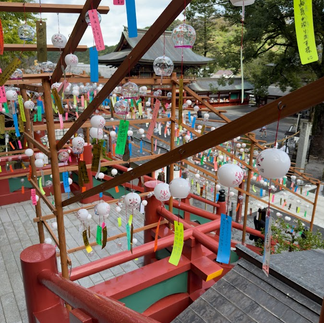


Yutoku Inari is one of Saga’s most impressive shrines. The main hall is built into the hillside on tall supports, so the building seems to float above the trees when viewed from below. It is dramatic without feeling as crowded or hurried as some of Japan’s better-known Inari shrines.
Allow time to walk up through the shrine grounds rather than taking only a photograph from the entrance. The stairs and higher viewpoints reveal how the buildings sit against the mountain, and the climb is manageable if you take it slowly.
Ouo Shrine and the sea torii


The three torii at Ouo Shrine look completely different depending on the tide. At high tide, they stand in the water and appear to float. At low tide, the seabed opens up and visitors can walk much closer.
Choose high tide for the clean, floating-torii view.
Choose low tide if you want to walk across the exposed flats and photograph the gates from nearby.
Tide times change every day, so check a local forecast on the morning of your visit. Public transport is limited in this area, which makes it especially important to match the tide with the available bus or train connections.
Pair this with: Nagasaki 2-Day Itinerary: History, Food and Night Views
Seafood lunch near Tara


I stopped at Kaidomaru for seafood barbecue after visiting the torii. The shellfish was simple, fresh and exactly what I needed after spending the morning working around rural transport schedules.
The owner was welcoming even though my Japanese was limited. We managed with gestures and phone translation, which is often enough in small local restaurants when both sides are patient.
A small encounter at Tara Station
My mobile data stopped working at Tara Station, and I was no longer certain which platform I needed. I asked a woman sitting nearby, and we started talking through a translation app. By coincidence, she worked at the restaurant I had just visited.
It was a brief encounter, but it is the kind of thing that happens more easily when a trip is slow enough for you to ask for help and actually speak to people.
Karatsu Kunchi

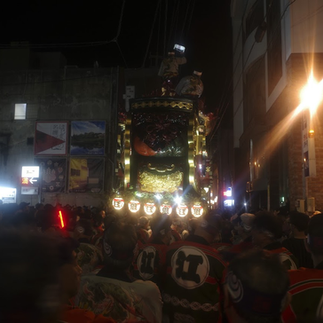


Karatsu Kunchi is usually held from November 2 to 4. Its enormous hikiyama floats move through streets packed with spectators, food stalls and festival groups. After the quiet coast of Saga, arriving in Karatsu felt like stepping into a completely different trip.
The atmosphere was excellent, but my biggest mistake was assuming I could easily return to Fukuoka that night. Crowds slowed the walk back to the station, and leaving early would have meant missing the best part of the evening.
Plan how you will leave the festival
I eventually booked a room at the last minute. With unreliable mobile data, I had to ask another group for Wi-Fi before I could complete the reservation. It worked out, but it would have been much easier to arrange accommodation in advance.
Book Karatsu accommodation early if you want to stay for the evening.
Download offline maps and save train times before arriving.
Carry a power bank; navigation, translation and booking apps drain the battery quickly.
Do not rely on the final train unless you are willing to leave the festival early.
Can you do this route without a car?
Yes, but it works best for travellers who are comfortable with waiting and changing plans. Build generous transfer time into the day and choose the places that matter most rather than forcing every stop into one schedule.
A car makes the coastal section much easier. Without one, I would treat Yutoku Inari and the sea torii as the main daytime stops, then continue to Karatsu only if the festival or an overnight stay is the priority.
Further reading
More reading
Related guides
Nagasaki 2-Day Itinerary: History, Food and Night Views|Fukuoka 3-Day Itinerary: A Practical First-Timer Route


