
Tokyo–Kawaguchiko–Hakone 3-Day Itinerary Without a Car
- Iris

- 20 hours ago
- 8 min read
For most travellers starting in Shinjuku, the most resilient Tokyo Kawaguchiko Hakone itinerary is Kawaguchiko on night one and Hakone on night two. It gives Mount Fuji two viewing windows, uses Gotemba as the cross-region transfer on day two, and leaves you near Odawara for Tokyo or a westbound Shinkansen on day three.
The trip works only when the transfer day is treated as a travel day, not as a competition to complete every lake, ropeway and museum. Luggage, a ryokan dinner deadline and date-specific mountain buses determine whether the itinerary feels efficient or rushed.
Tokyo Kawaguchiko Hakone itinerary: the 30-second answer
Day 1: travel from Tokyo to Kawaguchiko and stay near the station, south shore or a pre-arranged north-shore hotel. Day 2: use the morning for Mount Fuji, then travel through Gotemba into Hakone and arrive before dinner. Day 3: choose one Hakone area, descend to Odawara, and return to Tokyo or continue to Kyoto or Osaka.

A Kawaguchiko first night preserves a second-morning visibility window; image record: Fuji Five Lakes Ryokan Association media.
Kawaguchiko first or Hakone first?
From Shinjuku, Kawaguchiko first is usually cleaner because the Fuji Excursion, highway bus and Otsuki transfer all begin on the western side of Tokyo. From Tokyo Station or Shinagawa, Hakone first can work when an early Odawara arrival and a dinner-included ryokan are the priorities. For a day-three journey to Kyoto or Osaka, however, Hakone should normally be the second night so that Odawara is the exit rather than a detour.
Travellers returning to Tokyo can use either order. Put Kawaguchiko first when Mount Fuji at dawn matters most. Put Hakone first only when its first-night dinner is fixed or when returning from Kawaguchiko to Shinjuku on day three is acceptable. Do not put Kawaguchiko last before an international flight or a tightly timed westbound train.
Three-day car-free itinerary at a glance
Day 1|Tokyo to Kawaguchiko; sleep in Kawaguchiko
Use the Fuji Excursion, a highway bus, or the JR Chuo Line to Otsuki plus Fujikyu Railway. Leave in the morning, store luggage first, and choose only one or two lake-area activities. Direct trains and buses should be reserved; road traffic can delay buses, and a north-shore hotel needs a confirmed shuttle or taxi plan.
Day 2|Kawaguchiko through Gotemba to Hakone; sleep in Hakone
Keep the morning for Mount Fuji, then return to Kawaguchiko Station with luggage and travel towards Gotemba. Transfer to the correct bus for Sengokuhara, Togendai, Gora or Yumoto. Do not plan the full Hakone loop. Check date-specific services and platforms rather than relying on a remembered last bus, and reach a dinner-included ryokan before evening.
Day 3|Half a day in Hakone, then Tokyo or Kansai
Choose one zone according to the hotel: Yumoto for an early exit, Gora for the cable-car and Owakudani side, or Lake Ashi for the quiet shoreline. Move towards Odawara before a fixed train. Reserve Tokaido Shinkansen oversized-baggage space when required, and leave the mountain early during disruption.
Plan A: one night in Kawaguchiko and one night in Hakone
On day one, drop luggage and choose one coherent theme: the ropeway and lakeside, Oishi Park, Fuji-Q, or a hotel-led onsen afternoon. Staying near Kawaguchiko Station or the south shore makes the next morning easier; a north-shore property is worthwhile only when dinner, taxi or shuttle timing is secured. On day two, preserve the early visibility window, then make Gotemba and the Hakone hotel the main tasks. Day three is for a single Hakone zone and the Odawara exit.

Mount Fuji from a Lake Kawaguchiko boat; image: Kounoichi / Wikimedia Commons, CC BY-SA 4.0.
Related reading
Choose the Fuji-area base: Kawaguchiko or Fujiyoshida: Where to Stay for Two Nights
Choose the Hakone base: Where to Stay in Hakone for One Night: Yumoto, Gora or Lake Ashi
Plan B: Hakone first, Kawaguchiko second
This order suits travellers leaving from the Tokyo or Shinagawa side, people whose Hakone dinner is fixed on night one, and those happy to return from Kawaguchiko to Shinjuku on day three. Reach Odawara early, explore only one part of Hakone, then use Gotemba to move to Kawaguchiko on day two. The weakness is the final departure: a highway bus can be delayed by traffic and the Fuji Excursion needs seat planning, so this order is poor before a flight or non-flexible Kyoto or Osaka connection.
Can you stay both nights in Kawaguchiko?
Yes, and it is the better trip for photographers, Fuji-Q visitors, north-shore resorts or anyone who wants two mornings of weather flexibility. Treat Hakone as an optional day trip that can be dropped, not a compulsory long-distance commute. The result is a better Kawaguchiko stay but no longer a true two-destination overnight itinerary.
Can you stay both nights in Hakone?
Yes. It suits onsen time, museums, wet-weather alternatives and travellers who do not want to repack. Stay in one base and divide the days by area. Do not force Kawaguchiko into an early-start, late-return excursion; Mount Fuji can appear from selected Hakone viewpoints, but the composition and probability are different.
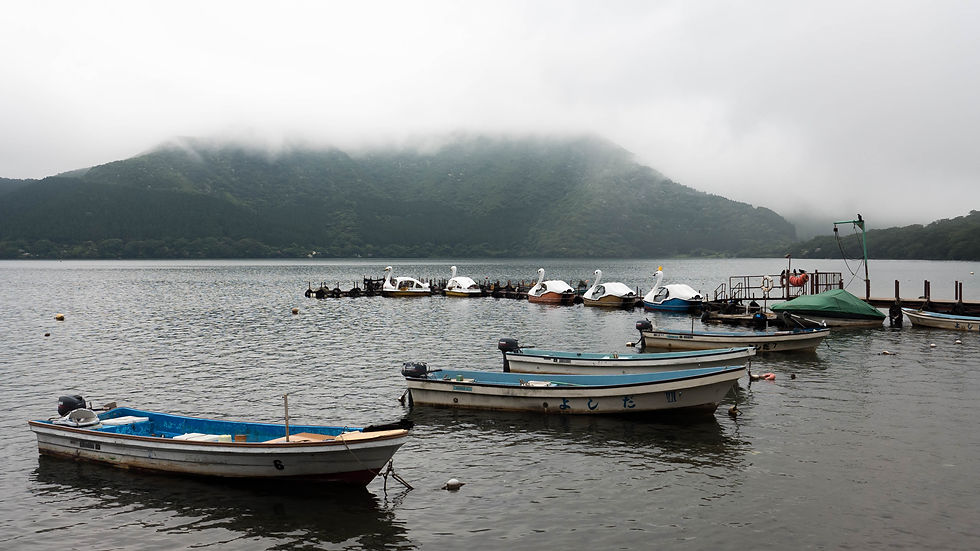
Lake Ashi rewards an overnight stay, but late transport and dining options are limited; image: ValueNavi media record, CC0.
How to travel from Kawaguchiko to Hakone without a car
The core route is the Fuji area to Gotemba, followed by the correct Hakone bus. Some services are reservable and some are ordinary local buses. Timetables, stopping patterns, fares and platforms change. Gotemba uses different platforms and routes for Sengokuhara, Gora, Togendai and the Lake Ashi side, so check the official date-specific journey the night before and again on the day. Never build the itinerary around a remembered last bus.
Large suitcases may be accepted in bus luggage holds, but capacity, full buses and repeated transfers remain practical risks. Large luggage is not accepted on the Hakone Ropeway. If a connection is missed, return to Gotemba Station or another staffed hub, then re-route towards Yumoto or Odawara if necessary; do not wait at a minor stop for an assumed late service.

Gora is a major mountain transfer point; image: 663highland / Wikimedia Commons, CC BY-SA 4.0.
Is the Fuji Hakone Pass worth it for this route?
Verified on July 30, 2026: the Fuji Hakone Pass is valid for three consecutive days and costs ¥11,100 for an adult and ¥3,600 for a child. It can make sense when you start in Shinjuku and use a substantial part of the designated Odakyu, Hakone, Fujikyu Railway and Fuji-area bus networks. It does not cover the JR Chuo Line from Shinjuku to Otsuki, the Shinjuku–Kawaguchiko highway bus, or the Shinjuku–Tomei-Gotemba highway-bus sector. A Romancecar limited-express ticket is extra. Point-to-point fares can cost less when the first leg is a highway bus and the Hakone stay is short.
What to do with large luggage
The most robust plan is a small overnight bag. Forward the main suitcase from Tokyo to the city or hotel used after this two-night trip and carry only what is needed. Delivery across regions is not a guaranteed same-day service; confirm hotel acceptance, name format, cut-off and arrival date. Keeping luggage with you avoids delivery uncertainty but makes Gotemba and mountain buses harder. Kawaguchiko Station has lockers and limited-hours storage. Hakone-Yumoto's official same-day service is only between the station and participating Hakone accommodation, not a Kawaguchiko-to-Hakone delivery service.
What if Mount Fuji is hidden?
Keep two viewing windows: day-one afternoon and day-two morning. If the mountain remains clouded, switch to the lakeside, museums, onsen or Fuji-Q rather than delaying the Gotemba transfer. Two windows improve the odds; they do not create a guarantee.

Oishi Park can be shortened or extended according to visibility; image: Olaf2 / Wikimedia Commons, CC BY-SA 4.0.
What if the Fuji Excursion is sold out?
Keep the trip and change the first leg. Take the JR Chuo Line to Otsuki and transfer to a Fujikyu Railway local or limited-express service, or reserve a highway bus and allow for road delay. A seat-unassigned limited-express product is not the same as a guaranteed assigned seat, so read the rules for the selected train.
What if the Hakone ropeway, ship or bus is suspended?
Check Hakone's live operating status before entering the mountain. If the ropeway stops, use buses or reduce the day to Gora or Yumoto. If the sightseeing ship stops, do not force the loop. During snow, wind, accidents or severe crowding, descend towards Odawara earlier. Completing every vehicle is not more important than reaching the hotel and onward train.
Can a ryokan dinner cut-off break the itinerary?
Yes. Dinner-included accommodation often requires arrival well before the final check-in time. Kawaguchiko properties such as Konansou and Ubuya publish evening meal limits, while Hakone Kowakudani Onsen Ten-yu warns that dinner may not be available after a late arrival. The exact booking plan controls. On the transfer day, aim to enter the hotel area around 4–5 p.m., not at the theoretical last check-in.
Day three: Tokyo, Kyoto or Osaka
For Tokyo, descend through Hakone-Yumoto and Odawara with a mountain-transport buffer. For Kyoto or Osaka, make Hakone night two and board the Tokaido Shinkansen at Odawara. On JR Central services, baggage with total dimensions of 161–250 cm requires a reserved seat with oversized-baggage space; items over 250 cm cannot be taken aboard.
Who should not combine both places in three days?
Choose one destination if you have several large suitcases, limited mobility, a stroller that must be folded repeatedly, a child who needs a fixed nap, a winter trip with low tolerance for disruption, or an expensive ryokan where the room and baths are the main purpose. Older travellers should favour direct services, lifts and station-area hotels over an ambitious cross-region day.
Pair this with
Plan a lakeside leg: Kawaguchiko to Oishi Park: Boat or Red-Line Bus
Seasonal Hakone planning: Hakone in Autumn: Lake Ashi, Sengokuhara and Day-Trip Planning
Booking order
First decide the day-three direction and hotel order. Second book the dinner-included Hakone ryokan and record the meal cut-off. Third book Kawaguchiko. Fourth reserve the Fuji Excursion or highway bus. Fifth calculate whether the pass pays for the actual sectors. Recheck Gotemba buses and Hakone operations 48 hours before travel and again on the day; attractions come last.
Final decision flow
Kyoto or Osaka on day three: Kawaguchiko first, Hakone second. Shinjuku start and sunrise priority: Kawaguchiko first. Non-movable Hakone dinner on night one: Hakone first, but avoid a fixed westbound connection on day three. Several large bags or slow family travel: stay in one destination. Unable to reach Hakone before dinner: use Yumoto or book a room-only plan.
FAQ
Do Kawaguchiko–Hakone buses need reservations?
It depends on the selected service. Some are reservable and others are ordinary local buses. Search the exact date and confirm the Gotemba platform and final destination.
Is one night in each place too rushed?
It is workable when day two is deliberately light and you reach Hakone before dinner. It becomes rushed when you try to complete the main sightseeing circuits in both regions.
Does the Fuji Hakone Pass include JR trains?
It does not include the JR Chuo Line from Shinjuku to Otsuki. Its value comes from the designated Odakyu, Hakone, Fujikyu Railway and bus networks.
Can a suitcase be delivered from Kawaguchiko to Hakone on the same day?
Do not assume so. Hotel acceptance, carrier cut-offs and delivery dates vary. An overnight bag plus forwarding the main case to the next city is the safer strategy.
More to read
Mount Fuji hiking extension: Mount Fuji Yoshida Trail 2026
Compare stays in both regions
Compare the same dates and total taxes, then verify the exact room name, breakfast or dinner, cancellation deadline, location and shuttle. A view, private onsen or transfer should be treated as included only when the selected rate says so.
Transport, pass, luggage, dinner and operating information last verified July 30, 2026. Timetables, fares and hotel conditions change; recheck official sources before travel.
Comments