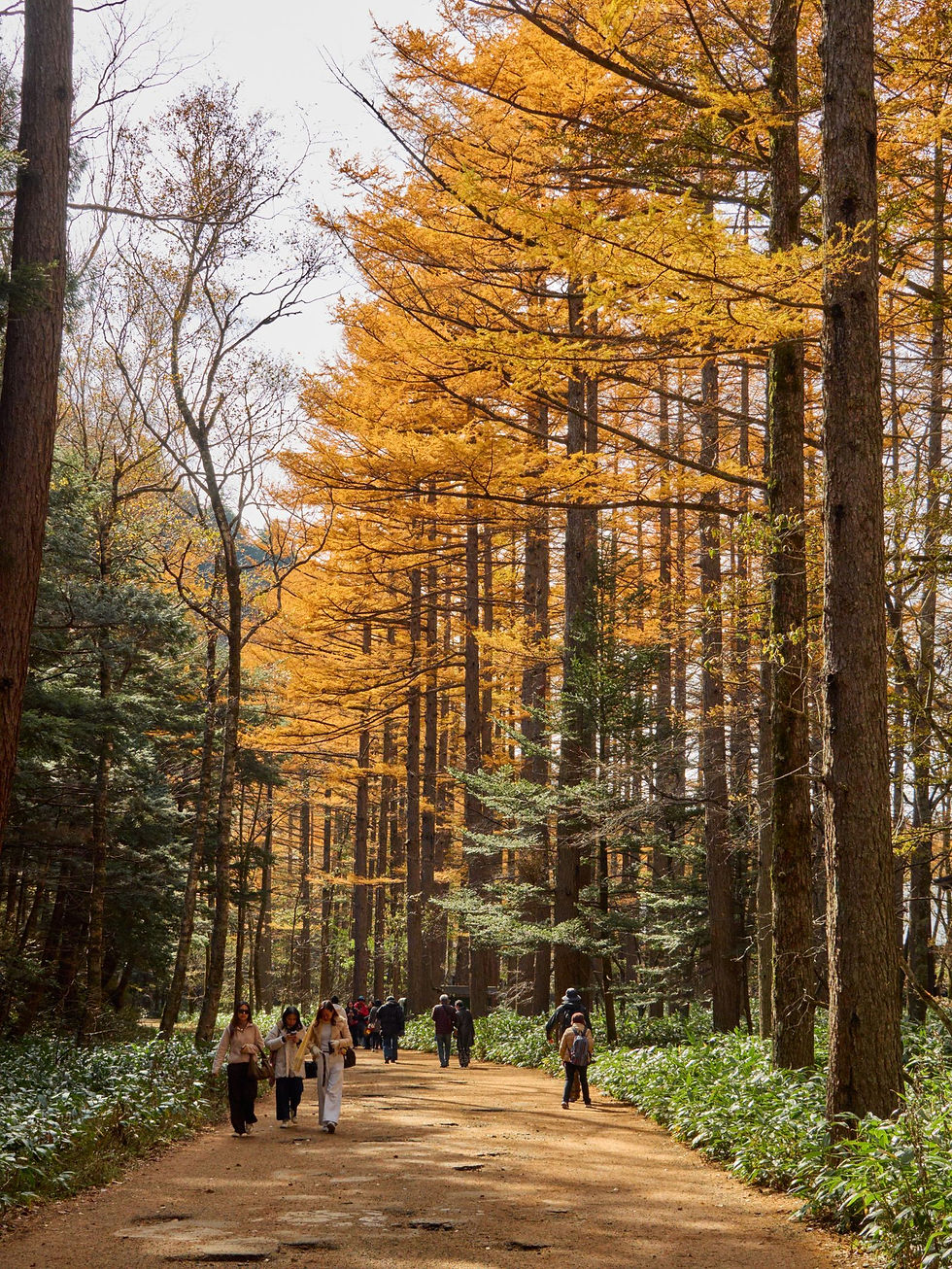
Tokyo to Nikko Autumn Leaves: Trains, Passes, Day Trips and Overnight
- cody
- 3 days ago
- 5 min read
The correct Tokyo-to-Nikko autumn route begins with the Tokyo hotel location, then the choice between central Nikko and Oku-Nikko, and only then the railway and pass. The intercity journey of roughly two hours is the first layer; local bus queues, shrine closing times, Irohazaka traffic and the protected return seat determine the usable sightseeing day.
Tokyo to Nikko autumn leaves: the practical decision
Use a Tobu limited express from Asakusa for hotels on the eastern side of Tokyo. Use a dated JR–Tobu through train when a Shinjuku or Ikebukuro hotel and the limited timetable align. Use Utsunomiya mainly when a nationwide or JR East pass is already paying for a larger journey. A day trip should choose the World Heritage district or Kegon Falls plus central Lake Chuzenji. One night is better for both districts, a lakeside morning, weather exchange or protection from the mountain-bus queue.

Asakusa: the strongest Tobu frequency
SPACIA X, Revaty and other all-reserved Tobu limited expresses run from Asakusa to Tobu-Nikko. A current timetable example is SPACIA X 1 leaving Asakusa at 07:50 and reaching Tobu-Nikko at 09:39, but schedules change by date and timetable revision. The most useful early departure and late-afternoon return can sell out on foliage weekends. Tobu sells limited-express seats from 09:00 one month before travel, so reserve both directions rather than protecting only the outbound journey.
The journey has a base fare and a separate reserved limited-express ticket. A NIKKO PASS can cover the designated base-fare component and local transport but does not create a limited-express reservation. An IC card can handle an eligible ordinary base fare and is also not a reserved seat. Travellers boarding at Kita-senju must confirm that the selected service actually stops there.
Shinjuku and Ikebukuro: JR–Tobu through trains
Selected Nikko and SPACIA Nikko services run from Shinjuku through Ikebukuro to Tobu-Nikko. They avoid moving luggage across Tokyo and can be the cleanest option for western Tokyo hotels, older travellers and families. The disadvantage is low frequency and weaker recovery after a missed train. The JR TOKYO Wide Pass covers eligible through services, not an Asakusa Tobu limited express or the Nikko bus network.
Use JR-EAST Train Reservation, a JR ticket machine or a staffed JR office for these trains. Confirm the exact English confirmation, payment card acceptance and ticket collection method. Reserve the return at the same time. If the useful return is sold out, changing railways also requires a smaller sightseeing plan rather than merely adding transfers.
Tokyo Station and Ueno: via Utsunomiya
Travel to Utsunomiya by Tohoku Shinkansen or the Utsunomiya Line and change to the JR Nikko Line. The Shinkansen version can approach two hours but costs more; the all-local journey is cheaper and closer to three hours door to door. This route is rational when a Japan Rail Pass or JR East Pass already has broader value, or when the itinerary naturally passes Utsunomiya. Nikko alone rarely justifies buying a broad JR pass.

When does a NIKKO PASS make sense?
The NIKKO PASS World Heritage Area currently costs ¥3,000 for an adult and is valid for two days. It fits central Nikko, Shinkyo, designated World Heritage buses and a Kinugawa extension. The All Area Pass currently costs ¥8,000 for an adult and is valid for four days. It becomes credible for an overnight trip with repeated buses to Lake Chuzenji, Senjogahara or Yumoto and, in season, the cruise or low-emission bus. Neither pass includes the Tobu limited-express reserved seat or shrine admission.
Calculate value from the fixed trip: Tokyo return base fare, the number of local bus journeys, whether Kinugawa or Oku-Nikko is genuinely included, and whether a seasonal cruise will actually operate and be used. Do not add Yumoto simply to recover a pass price. Akechidaira Ropeway has been suspended for facility renewal since January 16, 2026, with the official period currently extending to August 31, 2027 and possibly longer; it is not a usable 2026 stop.

Three realistic Tokyo day trips
A|World Heritage district: reach Nikko in the morning, use Omotesando or Shinkyo, then prioritise Toshogu, one or two additional temple or shrine areas, lunch and Shinkyo. Start back toward the station around 16:00–17:00 while a protected train remains. This is the most reliable first-time, senior and family day trip because the cultural value survives imperfect foliage.
B|Kegon Falls and Lake Chuzenji: join the Chuzenji or Yumoto bus queue immediately after arrival and keep only Kegon plus the central lakeshore, choosing a cruise or a short walk rather than both. The scheduled bus journey is roughly fifty minutes, but Irohazaka foliage traffic can make the timetable meaningless. Define in advance that a 45-minute delay removes the cruise.
C|Compressed central Nikko plus the lake: defensible only on a weekday with an extremely early start, stable weather and permission to delete half the plan. Visit Kegon and the central shore first, descend around midday, then choose Toshogu or Shinkyo—not the full district. Any 30–45 minute delay cancels the second zone. It is unsuitable for foliage weekends, seniors and families.

Day trip or overnight?
A day trip works when one district is enough. One night separates temples and Lake Chuzenji and adds a lakeside morning, onsen evening, weather flexibility and a mountain-bus buffer. Stay near Tobu-Nikko or JR Nikko for a late arrival, luggage and an early next-day bus; near Shinkyo for temples; at Lake Chuzenji for an Oku-Nikko morning; or at Yumoto only for a high-elevation plan. Kinugawa is an onsen and room-inventory alternative, not a Lake Chuzenji base.
International luggage and driving cost
Do not take a large suitcase on a day trip. For one night, leave the main case at the same Tokyo hotel or forward it to the next city and carry an overnight bag. Nikko Station lockers cannot be guaranteed on a foliage morning. A four-person rental calculation must include full insurance, fuel, tolls, ETC, Tokyo pickup and return, parking, child seats and time lost in the city. Rail is easier for Toshogu; a car becomes competitive only for several dispersed Oku-Nikko stops and luggage.
International drivers also need the correct licence or permit, confidence with right-hand-drive mountain roads and a winter-weather decision. Alcohol, ice, early snow, darkness or unfamiliar mountain driving remove the rental option. Protect the final night before an international flight; neither an Irohazaka descent nor a rural bus belongs on departure day.
Sold-out seats, congestion and weather recovery
Limited express sold out: try another Tobu departure, a dated JR–Tobu service, ordinary Tobu or Utsunomiya and reduce the sightseeing scope. Long bus queue or Irohazaka congestion: keep central Nikko on foot or remove the cruise and higher extension. Upper foliage finished: descend toward central Nikko. Central colour early: retain temple culture or move higher. Heavy rain: use temples, museums and an onsen. Early snow or ice cancels inexperienced driving.
Official booking and timetable checks
Verify the official NIKKO PASS information, SPACIA X timetable and the latest Tobu Bus Nikko timetable before paying.