Yabakei Autumn Leaves Guide: Hitome Hakkei, Ao-no-Domon, Driving and Hotels
- cody
- 4 days ago
- 5 min read
Quick answer: Yabakei is a collection of separate valleys and cultural sites, not one park. First-time drivers should make Hitome Hakkei the main objective and add only one lower stop. Travellers without a car, older visitors and families should focus on Ao-no-Domon, Yabakei Bridge and the lower Hon-Yabakei corridor. Do not attempt Hitome Hakkei, Ao-no-Domon, Rakanji and Keisekien as four equal stops in one day.
Last checked August 4, 2026. Nakatsu City reopened Ao-no-Domon to pedestrians on April 1, 2026, with a signed detour through the hand-carved tunnel side where parts of the road/footpath remain unavailable. Vehicle access remains closed because another rockfall was found in March 2026, so drivers must use the temporary route across the river. Hitome Hakkei's official historical foliage window is mid-November to early December, and the viewpoint itself is not illuminated.
Choose Hitome Hakkei, Hon-Yabakei or Rakanji
Hitome Hakkei is the classic Shin-Yabakei landscape: rock formations, a compact observation area, shops and a path across the river. Nakatsu City suggests roughly 30–60 minutes and lists a public car park with 256 standard spaces about five minutes from the viewpoint. That capacity does not remove peak-weekend congestion, so arrive in the morning and treat the second zone as optional.
Ao-no-Domon, Yabakei Bridge and Kyoshuho form a lower cultural corridor with easier route shortening. This is the better choice for older travellers, families or a no-car day. In 2026 pedestrian and vehicle access are different: walking uses the signed tunnel-side diversion, while cars must follow the river-side detour. A navigation app's shortest line may not be legally open.
Rakanji adds a temple, religious heritage and uphill walking. It is not simply another flat photo stop. Nakatsu's official driving model treats Ao-no-Domon, Rakanji and Hitome Hakkei as separate driving segments. Remove Rakanji first in rain, with older companions or when traffic has already consumed the schedule.
Keisekien and Yabakei Bridge provide a lower-elevation, lower-walking backup and may remain useful after higher colour weakens. Past illuminations or festivals do not confirm a 2026 event. Without a dated official announcement, plan a daylight visit and leave the valley before dark.
Zone | Best for | Delete first when |
|---|---|---|
Hitome Hakkei | First visit, photography, drivers | Parking is full or valley traffic is severe |
Ao-no-Domon / bridge | Families, older travellers, no-car plan | River warning or pedestrian closure |
Rakanji | Temple, heritage, stronger walkers | Rain, limited time or reduced mobility |
A realistic first-time driving day
Place Hitome Hakkei in the morning to avoid the worst return traffic and the short late-autumn afternoon. Use 45–75 minutes for the observation area and core path, then eat in Shin-Yabakei. Around noon, decide whether the second objective is Ao-no-Domon, Keisekien or simply the return to Hita or Nakatsu.
When the car park is full, traffic is already crawling or weather deteriorates, cancel the second zone. Never park on the roadside and never start an unfamiliar mountain diversion after sunset. The official 256-space car park is large, but almost every visitor still targets the same autumn hours.
Hita is the more natural start for Hitome Hakkei and Shin-Yabakei. Nakatsu is stronger for Ao-no-Domon, Yabakei Bridge and Hon-Yabakei. A Fukuoka day trip should use one corridor only; adding Hita, Hitome Hakkei, Rakanji, Ao-no-Domon and Beppu creates a long driving day with little actual foliage time.
Ao-no-Domon access in 2026
The city notice states that pedestrians regained access on April 1, 2026, but some road-and-footpath sections remain unavailable. The walking route uses a signed diversion on the hand-carved tunnel side. Travellers with a wheelchair, stroller or uncertain balance should examine current surface conditions rather than interpreting “reopened” as full restoration.
Vehicles remain prohibited because another rockfall was identified in March 2026. Follow the official map and roadside signs for the route across the river. Do not attempt a U-turn or passenger pickup in the closed section. Plan the parking point and walking start separately before entering the narrow corridor.
Without a car, use Nakatsu as the staging base and select only Hon-Yabakei stops with a confirmed dated bus. Check the exact outbound and return service, payment method and seasonal changes. A previous year's autumn service should not be treated as a permanent 2026 timetable, and a no-car day should not attempt Hitome Hakkei as an improvised extension.
Foliage timing and the lower-zone extension
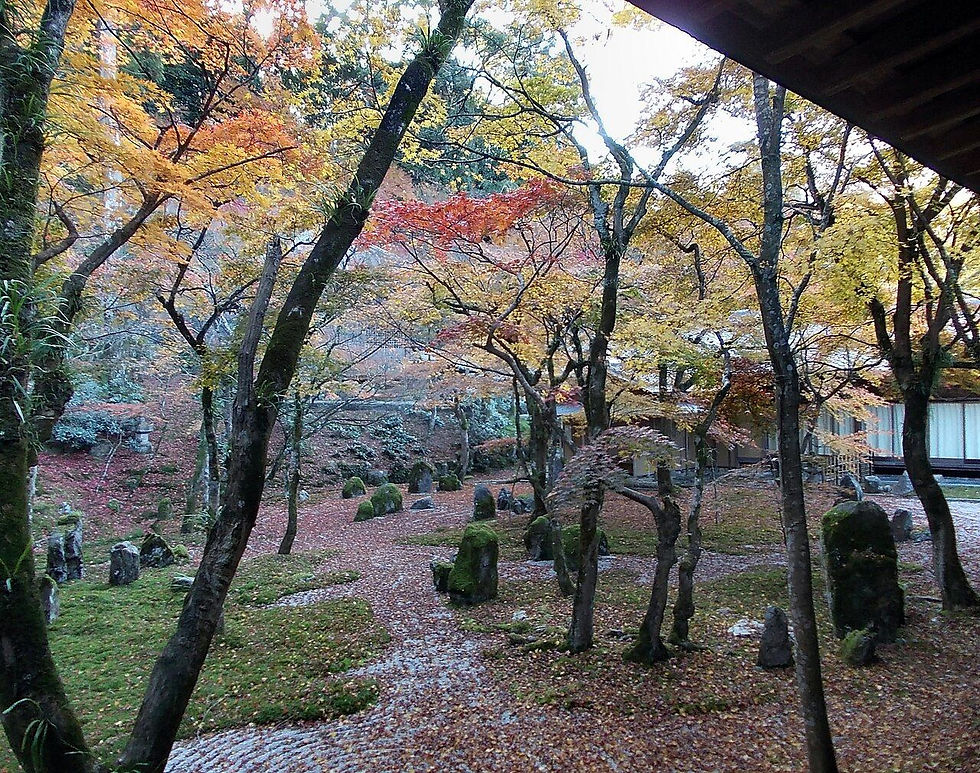
Nakatsu City's historical window for Hitome Hakkei is mid-November to early December, but temperature, wind and elevation shift the result each year. Shin-Yabakei rock scenery, Ao-no-Domon riverbanks and lower Keisekien should be checked separately. Late November can still work, but only with zone-specific current reports.
Hitome Hakkei itself has no illumination. A nearby seasonal maple has been lit in previous years, but the 2026 dates must be formally announced. The path between the car park and viewpoint has limited lighting, so leave before dark when no confirmed event justifies a later mountain-road return.
Hita, Nakatsu or Beppu as the hotel base
Hita suits Hitome Hakkei, Shin-Yabakei and an arrival from Fukuoka, and it connects naturally to Yufuin. Nakatsu suits Ao-no-Domon, Yabakei Bridge, Rakanji and no-car staging. Beppu has the largest hotel supply, strong JR access and rain-day onsen, but it sits farther from the valley. The hotel base should follow the chosen corridor, not simply the cheapest room.
caffel Hina-no-sato, Hotel Route-Inn Hita-Ekimae and Hotel Socia are useful Hita location examples. Toyoko Inn Oita Nakatsu Ekimae and Grand Plaza Nakatsu Hotel illustrate Nakatsu backups. Leave large luggage at the city hotel or forward it and carry a day pack. A half-board ryokan creates a fixed dinner and transfer deadline.
Heavy rain, full parking and closure Plan B
Cancel gorge paths, Kyoshuho exploration and Rakanji slopes during heavy rain or a river warning. Use Nakatsu Castle, Hita's Mameda district, Beppu onsen or an indoor stop. Even after rain stops, rockfall, wet surfaces and river level remain relevant.
When parking is full or a road closes, remove the second zone and move lower. Do not queue on the road or follow a navigation app through tiny unofficial alternatives. If Shin-Yabakei is past peak, check Hon-Yabakei and Keisekien; if lower colour has also finished, keep the onsen and cultural day instead of crossing prefectures for another uncertain valley.
Frequently asked questions
Do I need a car for Yabakei?
A complete multi-zone route normally needs a partial rental. A no-car day can use selected Hon-Yabakei stops from Nakatsu.
Can cars use Ao-no-Domon in 2026?
Not through the closed road section as of the verification date. Pedestrians use the signed diversion; vehicles use the temporary route across the river.
Should I stay in Hita or Nakatsu?
Use Hita for Hitome Hakkei and Shin-Yabakei; use Nakatsu for Ao-no-Domon, lower sites and no-car staging.
Related reading
Official sources and last verification
Dynamic information was last checked on August 4, 2026. Live colour, roads, buses, parking and events must be rechecked for the travel date.