
Huis Ten Bosch Fireworks Guide: Seats, Arrival Time and Exit Strategy
- Iris

- Dec 21, 2025
- 3 min read
Updated: Jul 17

Huis Ten Bosch fireworks nights require more planning than an ordinary theme-park visit. The show draws large crowds, viewing areas fill early and the journey out can take much longer than the journey in.
I bought a reserved seat but eventually moved because I wanted to photograph the fireworks with the Domtoren tower in the foreground. The seat was still useful as a guaranteed place to rest; it simply was not the best angle for the photograph I wanted.

Check the event details first
Huis Ten Bosch holds different fireworks events during the year. Show times, ticket categories, viewing zones and transport arrangements vary, so confirm the current event page before relying on an older timetable.
Check whether normal park admission includes the fireworks event.
Check whether reserved seating is sold separately.
Save the final train, bus or parking information before entering the park.
Review restrictions on tripods, chairs and reserved viewing areas.
When to arrive
Arriving in the early afternoon gives you time to enter without rushing, see part of the park and inspect the viewing area before the largest evening crowd arrives. Visitors coming only shortly before the show have fewer choices and may spend the final hour searching for somewhere to stand.

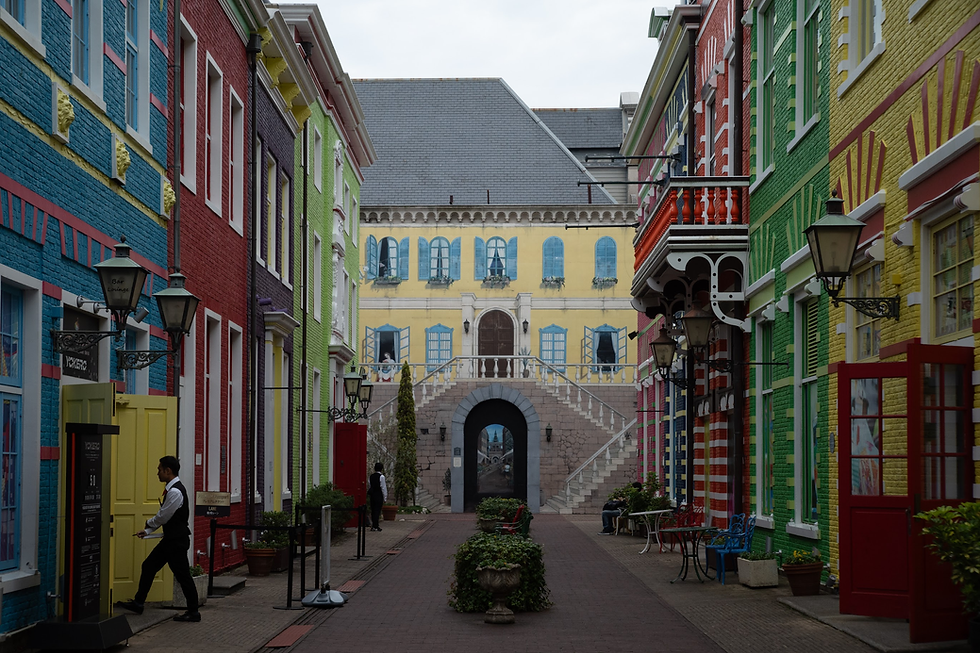
I used the Canal Cruiser during the afternoon. It was a useful break from walking and gave a different view of the European-style buildings, especially as the light softened towards evening.
A few attractions worth fitting in
Sky Carousel

The upper level gives a wider view across the park than I expected. It is not a thrill ride, but it is a pleasant short stop and photographs well before dark.
VR attractions
The motion-based VR ride I tried was more intense than the park’s quiet appearance suggested. It can be a good indoor option, but queues on event days may not justify using a large part of the afternoon.
Sea Fantasia

Despite the name, Sea Fantasia is an immersive projection and light experience rather than an aquarium. It may suit families and visitors who enjoy interactive visuals, but do not enter expecting live marine animals.
Do you need a reserved seat?
A reserved seat is most useful when you are travelling with children, older relatives or anyone who cannot comfortably stand for a long time. It also removes the need to hold an unreserved place for several hours.
Photographers may prefer an unreserved location with a landmark in the foreground, but this requires arriving early, checking the rules and accepting that the view may be blocked as the crowd grows. Buying a seat does not guarantee the best photograph; it guarantees a defined viewing place.

Photography advice
I chose a position that placed Domtoren beneath the fireworks. The tower made the scene recognisably Huis Ten Bosch rather than another photograph of a bright sky.

Scout the angle before dark and note where crowds are allowed to stand.
Include a tower, bridge, canal or building for scale.
Bring a tripod only if the event permits it and you can use it without blocking others.
Carry a power bank and keep the camera protected from rain or sea air.
Leaving after the fireworks
The exit is the least enjoyable part of the night. Large numbers of visitors move towards the station, buses and car parks at the same time, so walking and boarding take longer than usual.
Stay overnight nearby if you want to avoid a late journey back to Fukuoka or Nagasaki.
If returning by train, save the final service and allow time to reach the station through the crowd.
If driving, expect slow movement from the car park and do not arrange a tight onward schedule.
Leaving before the finale may save time, but it also means missing the strongest part of the show.
Pair this with: Nagasaki 2-Day Itinerary: History, Food and Night Views
What to bring
A warm layer for the long period of standing after sunset.
Light rain gear, which is easier than an umbrella in a dense crowd.
A power bank and enough storage for photographs or video.
Comfortable shoes for a full day of walking and a slow exit.
Final recommendation
Arrive with enough time to enjoy the park before the show, decide early whether comfort or photography matters more, and plan the journey home before the fireworks begin. The display is impressive, but the quality of the evening depends heavily on what happens before and after it.
Further reading
More reading
Related guides
Nagasaki 2-Day Itinerary: History, Food and Night Views|Nagaoka Fireworks Guide: Tickets, Hotels and Getting Home


